Signs Your Pool Filter Needs a Check-Up in Treasure Island, FL
Your pool filter quietly keeps your water clear and safe. But when it starts having issues, you might see cloudy water, weak flow, or a filter that needs cleaning too often. Knowing these early signs can help you keep your pool in good shape and avoid bigger problems.
Let’s explore how to tell if your filtration system is doing its job, what symptoms to watch for, and when to take action. If your pool needs more than just a quick rinse, professional pool cleaning and regular pool service can help keep your system running smoothly.
Why Your Pool Filter Matters More Than You Think
Filtration Keeps Water Clean
Your pool filter removes debris and tiny particles that chlorine alone can't handle. Even if the water looks clear from above, invisible contamination can build up fast without proper filtration. According to the CDC's swimming guidelines, clean water depends on both sanitation and proper circulation, so your filter is doing more than just catching leaves.
When filtration is strong, chemicals distribute evenly and debris doesn't sit in the water long enough to cause cloudiness or algae. But when filtration weakens, your entire pool system has to work harder, leading to more chemical use, higher energy costs, and a shorter lifespan for equipment.
Protecting Water Quality and Your Equipment
Your filter also helps protect the rest of your pool system. If fine debris keeps cycling through the water, it can wear on the pump, clog lines, and strain the heater or automatic cleaner. Over time, this can lead to more breakdowns and more service calls.
For consistent results, pairing good filtration with routine maintenance is smart. Services like pool filter replacement and pool equipment repairs can restore performance when cleaning alone isn't enough.
Common Signs Your Pool Filter Needs Attention
Cloudy Water That Won't Clear Up
One common sign of a struggling filter is cloudy water that doesn't improve after normal cleaning and chemical balancing. A healthy filter should remove suspended particles steadily, but if the media is worn out, those particles stay in the water. Cloudiness often returns quickly after brushing or vacuuming.
If the pool stays hazy even when sanitizer levels are right, the problem might be mechanical. Check the filter pressure, circulation pattern, and overall system flow for deeper issues that might need professional help.
High Pressure on the Gauge
A rising pressure reading is a clear sign that the filter is collecting too much debris or becoming clogged. Every system has a normal operating range, and when pressure climbs above that range, water moves less efficiently. This often means the filter is dirty, but it can also indicate failing media or internal parts that need attention.
The EPA notes that proper water management and maintenance are key to reducing contamination risks in recreational water, including maintaining filters in good condition to keep removing fine debris.
Weak Return Flow or Poor Circulation
If water coming out of the return jets feels weaker than usual, the filtration system might not be moving water well. Weak circulation can happen when the filter is dirty, the pump is struggling, or there's a blockage. It might also mean your filter is too small for the pool's demand or is nearing the end of its service life.
Poor circulation creates dead spots where algae and debris can collect, especially in corners, steps, and shaded areas. So, pay attention to flow along with testing chemicals or skimming the surface.
How Filter Problems Show Up in Real Life
Worn-Out Cartridge Filters
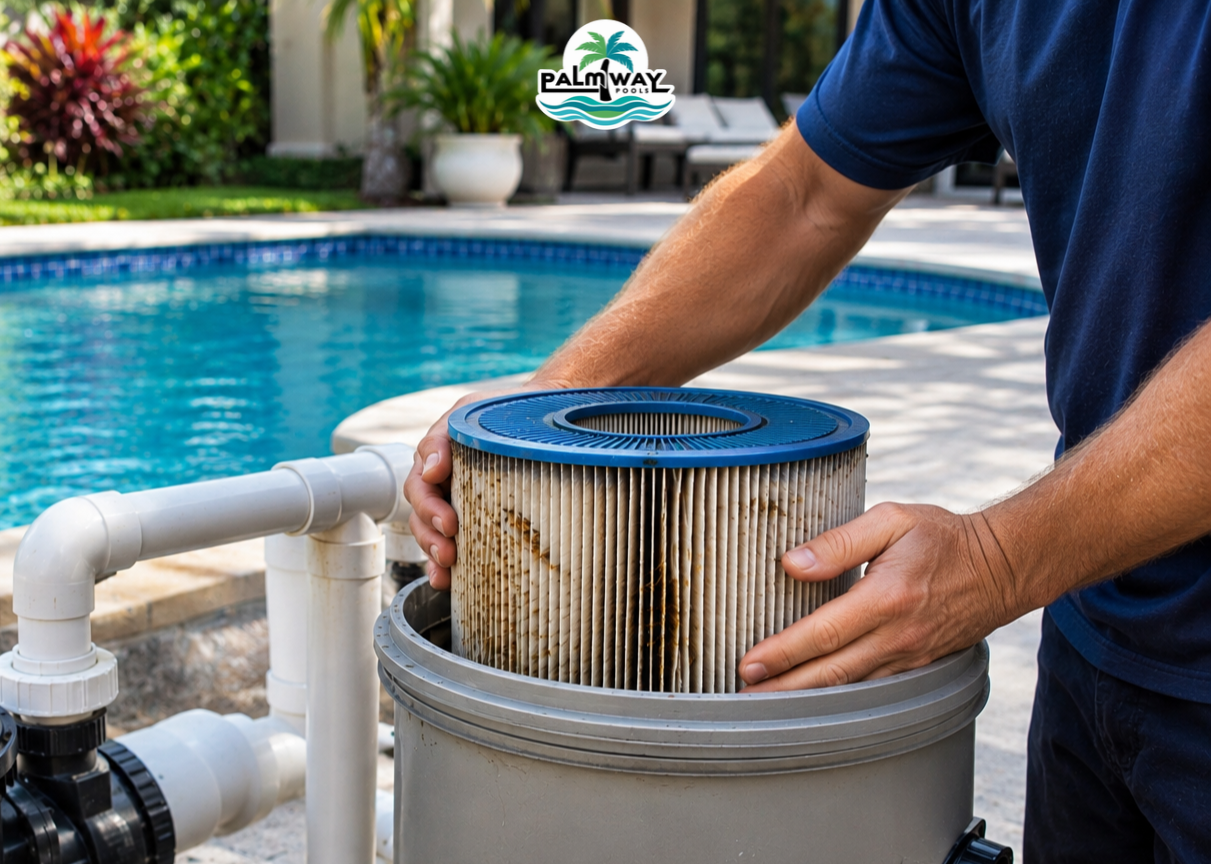
Cartridge filters are popular because they're easy to maintain, but they do wear down over time. When the pleats start to deteriorate, the filter loses its ability to trap small particles. You might notice the cartridge looks clean after washing, but the pool still appears dull or dusty.
Another clue is needing to clean the cartridge more often than usual. If you're spending more time rinsing than enjoying your pool, the filter media may no longer be effective. A replacement can be more cost-effective than repeated cleaning.
Sand Filters That Stop Trapping Fine Debris
Sand filters are durable, but the sand eventually becomes rounded and less effective at capturing small particles. Larger debris may still be caught, but finer dirt can pass right through and return to the pool. This results in water that looks slightly off, even after regular backwashing.
If your sand filter is older and the pool has become harder to keep clean, the sand may need replacing, or the internal parts may need inspection. A professional can determine if the issue is media fatigue, valve wear, or something else.
DE Filters Losing Powder or Pressure Balance
DE filters catch very small particles, but they need proper care. If you notice DE powder returning to the pool, pressure fluctuations, or a loss of clarity after cleaning, there might be an issue with the grid assembly or manifold. These components can crack, clog, or wear out with age.
Because DE systems are more specialized, it’s often best to have them evaluated by a professional if symptoms persist. A technician can determine if a repair or a pump replacement or filtration upgrade is needed for better long-term performance.
Simple Troubleshooting Steps You Can Try
Check the Pressure Gauge and Clean the Filter
Before assuming the filter is failing, start with the basics. Record the pressure gauge reading when the system is clean and compare it to the current reading. If the pressure is significantly higher, cleaning or backwashing might restore normal flow. This often solves the problem when the issue is just buildup.
Also, check baskets, skimmer lines, and the pump strainer for debris. A filter can't work well if the rest of the circulation system is clogged. Small blockages elsewhere can mimic filter failure and cause confusion.
Look for Patterns in Water, Not Just Appearance
Watch how debris moves in the pool. If dirt collects in the same area repeatedly, that may signal weak circulation rather than a simple filtration issue. If the water looks clean for a day or two then turns hazy again, the filter might be struggling to keep up with demand.
Also, notice how often you need chemical adjustments. Constant changes can be a sign of uneven circulation, often linking back to the filter and pump working less efficiently than they should.
Consider the Age of the System
Sometimes the most important clue is age. Filters don't last forever, and older systems often become less efficient even if they still run. As parts wear down, the filter may need more frequent cleaning, produce inconsistent results, or struggle to keep the pool clear during heavy use or after storms.
If your equipment is aging, evaluate the whole system instead of one part at a time. A professional inspection can show whether the filter, pump, or plumbing is the root of the issue.
When Filter Trouble Becomes a Bigger Problem
Cloudy Water Can Lead to Algae Growth
When filtration weakens, water clarity declines, opening the door to algae. Algae thrive when water is warm, poorly circulated, and not filtered well. Even a small amount can spread quickly if the system doesn't remove contaminants fast enough.
That's why you shouldn't ignore a filter issue for long. If your pool starts to look dull, green, or dusty, the filtration system may be letting contaminants linger long enough to create a larger cleanup job.
Strain on the Pump and Other Equipment
When a filter becomes clogged or inefficient, the pump has to work harder to move water. That extra strain can shorten pump life and reduce overall system efficiency. In severe cases, the pump may overheat, become noisy, or lose prime more often than it should.
This is why Palmway Pools recommends paying attention to equipment behavior early. If you suspect your circulation system is under strain, professional pump repair can sometimes prevent a complete breakdown and restore healthy water movement before more damage occurs.
Higher Chemical Use and Maintenance Costs
Poor filtration often leads to more chemicals, more brushing, and more frequent cleaning. Owners may try to compensate by adding sanitizer, clarifier, or algaecide, but those products can't fully replace a filter that's no longer doing its job. The result is usually more spending with less consistent water quality.
Better filtration supports better chemistry. When debris is removed efficiently, chemicals can work as they should, lowering waste and helping maintain a stable swimming environment over time.
How Professional Maintenance Boosts Filtration Performance
Routine Service Catches Problems Early
Professional pool maintenance isn't just about making water look good. It also includes checking pressure levels, inspecting filter media, reviewing circulation patterns, and making sure every part of the system supports healthy water movement. Small problems are easier and cheaper to fix before they become major failures.
If you want consistent care without the guesswork, regular pool service can help keep your filter system in top condition. A trained technician knows what to look for and can recommend whether the issue is cleaning, repair, or replacement.
Matching the Service Plan to Your Pool
Every pool uses its filter differently depending on size, location, weather exposure, swimmer load, and surrounding landscaping. A shaded pool with heavy leaf drop may need more frequent attention than one in a low-debris area. Seasonal use can also affect how hard the system works from one month to the next.
That's why flexible maintenance matters. A customized plan can reduce the risk of buildup, improve system longevity, and keep the filter working efficiently throughout the year.
Upgrades Can Improve Long-Term Results
Sometimes the best solution isn't another cleaning but a better system. If your equipment is outdated or repeatedly underperforming, an upgrade may save money in the long run. Better flow, improved media, and more efficient operation can make a noticeable difference in water clarity and maintenance time.
If you're weighing repair versus replacement, our pool equipment repairs and upgrades service can help you choose the most practical path. The goal is not just to fix a symptom, but to improve how the whole pool system performs.
What Homeowners Often Miss About Filter Health
Looks Can Be Misleading
A pool can look fine on the surface while the filter is already underperforming. Many owners think clear water means the system is fine, but filtration issues often begin quietly. The first signs may be subtle, like a bit more dust on the floor, slightly weaker jets, or a higher than normal pressure reading.
That's why routine checks are so valuable. A small change in appearance or performance can be the earliest warning that attention is needed.
Cleaning and Replacing Are Not the Same Thing
Many pool owners keep cleaning a filter long after it has lost efficiency. While rinsing and backwashing are necessary, they can't restore worn-out media or damaged components. If the filter is old enough, cleaning may only temporarily mask the underlying problem.
Understanding when to stop cleaning and start replacing can save money over time. If the filter is repeatedly clogging, losing pressure balance, or failing to improve water clarity, replacement may be the more effective fix.
Filter Issues Often Connect to Other Systems
Filtration doesn't work in isolation. If the pump is weak, the heater is restricted, or water chemistry is unstable, the filter can seem like the problem even when it's only part of the issue. That's why experienced technicians look at the whole system rather than one component at a time.
For example, a pool that needs pool heater repair may also benefit from a circulation check, because restricted flow can affect how well the heater and filter operate together. A holistic approach is usually the fastest way to solve recurring issues.
FAQs About Pool Filter Problems
How Often Should I Clean My Pool Filter?
It depends on the filter type, pool usage, weather, and surrounding debris. Some pools need attention every few weeks, while others can go longer between cleanings. What's important is keeping the pressure within the normal range and the water clear.
If the filter clogs quickly after cleaning, that signals a deeper issue. The problem might not be maintenance frequency but filter wear or an equipment imbalance needing professional evaluation.
Can a Dirty Filter Cause Algae?
Yes. A dirty or failing filter can reduce circulation and let debris stay in the water longer, creating favorable conditions for algae growth. Even with good sanitizer levels, poor filtration makes it harder to keep the pool consistently clean.
That's why algae prevention involves more than chemical treatment. Strong circulation and efficient filtration are essential parts of the solution.
When Should I Replace Rather Than Repair?
If the filter is old, repeatedly underperforming, or costing more in maintenance than it should, replacement might be better. A one-time repair can make sense for a minor issue, but persistent problems usually signal declining equipment performance.
If you're unsure, a professional inspection can help determine whether repair, replacement, or a combination of services will give you the best value. In some cases, a pool filter replacement is the most effective way to restore reliable performance.
How Palmway Pools Keeps Filtration Systems Running
Clearer Water Starts with Regular Maintenance
Palmway Pools helps homeowners and property managers keep filtration systems in shape with regular cleaning, chemical balancing, and equipment checks. The goal is to catch issues before they grow into major repairs and to keep your water clear for everyday enjoyment. That means less frustration, fewer surprises, and a pool ready when you want it.
For pools needing hands-on help, pool cleaning and ongoing support can make a big difference in how long equipment lasts and how consistently the water stays balanced. Good maintenance does more than improve appearance; it supports the entire system.
Service That Fits How You Use Your Pool
Every pool is different, which is why care plans should be practical rather than one-size-fits-all. Whether you use your pool daily, seasonally, or manage it for guests, the filtration system should be adjusted to match real-world conditions. Palmway Pools provides flexible support designed to reduce stress and keep your system operating as expected.
If your pool also includes a spa or hot tub, it’s worth protecting that system too. Our spa and hot tub maintenance service ensures every water feature gets the attention it needs for safe, comfortable use.
Wrap-Up: Keep an Eye on Your Filter
Your pool filter might not get much attention when everything's working, but it greatly impacts water clarity, comfort, and equipment health. Cloudy water, weak circulation, higher pressure, and repeated cleaning are all signs the filtration system may need help. When those symptoms appear, it's better to act early than wait for a bigger problem.
If your pool filter isn't performing well, start with basic troubleshooting, then bring in professional support if the issue continues. Palmway Pools is here to help with dependable maintenance, inspections, and equipment solutions that keep your water clear and your pool system running smoothly. Call (844) 307-1680 or email info@palmwaypools.com to schedule service and get your filtration system back on track.