Make Every Pool Day Better With Professional Water Balancing
Who doesn't love a sparkling, inviting pool? It's not just about looking good; it's about making sure everyone who takes a dip feels comfortable and ensuring your pool equipment lasts longer. With the right water chemistry, your pool becomes a fun retreat instead of a maintenance nightmare.
Many pool owners think it's just about dumping in some chlorine, but there's a lot more to it. Managing pH, alkalinity, calcium hardness, sanitizer levels, circulation, and bather load all play a part. That's why a lot of homeowners trust professional pool service and regular pool cleaning to catch issues before they turn into bigger headaches.
In this guide, we'll explore what professional water balancing really means, why it’s important, and how it makes owning a pool a smoother experience. Plus, you'll see how sticking to a maintenance routine can reduce stress, boost comfort, and protect your investment over time.
Why Balanced Pool Water Matters More Than You Think
Comfort for Swimmers
Balanced water is easier on your skin, eyes, and hair. When pH levels go haywire, you might feel burning eyes, itchy skin, or that strong chemical smell. If your water feels off, it might not be working as it should, even if it looks clear.
Too acidic, and your pool surfaces might get scratched up and metal parts could rust faster. Too basic, and you might see scaling or cloudy water. Keeping things balanced makes the pool comfortable for everyone, whether it's for families or friends chilling out.
Protection for Equipment and Surfaces
Your pool's chemistry has a big impact on how long your equipment lasts. Pumps, filters, heaters, seals, and pipes can suffer when the water’s not right. Over time, that means more service calls, pricier parts, and more downtime.
The U.S. Environmental Protection Agency highlights that managing water quality is key to protecting public health and system performance. The same goes for home pools—keeping the chemistry steady helps prevent buildup, corrosion, and wear on important parts.
Better-Looking Water Every Day
When the water’s balanced, it stays crystal clear. Sanitizers work better, debris gets handled quicker, and your filter doesn’t have to struggle with chemistry issues. So, no more surprises like dull water or cloudy days after a busy weekend.
Many pool owners first notice the benefits of professional balancing when they see the difference in their water before and after service. The clarity stands out, but the real win is stability. A stable pool is easier to maintain, enjoy, and trust.
The Key Chemistry Factors for a Healthy Pool
pH: The Foundation of Balance
pH tells you how acidic or basic the water is. Keeping pH in the right range helps sanitizers do their job and keeps swimmers comfy. If pH is off, chlorine doesn’t work as well, and your pool might invite algae or cause irritation.
Professionals start with accurate testing and make careful adjustments instead of guessing. It's crucial because a pool that looks fine might still be chemically unstable. Small, regular tweaks are usually better than big corrections after problems arise.
Total Alkalinity and Stability
Total alkalinity acts as a buffer for pH. If it's too low, pH swings up and down, making the pool hard to manage. If it's too high, water is tough to adjust and may cause cloudiness or scale.
Keeping alkalinity in check gives you predictable water balance. This predictability is great for homeowners who want fewer fluctuations between cleanings. It also keeps sanitizers working consistently, which is why professional monitoring is so valuable.
Calcium Hardness and Surface Protection
Calcium hardness helps protect pool surfaces from damage by aggressive water. If it’s too low, water might pull calcium from plaster or grout. If it’s too high, scaling on tiles or heaters might occur.
This is especially important in warmer climates where evaporation and refill water slowly change the chemistry. Pros track hardness to preserve the pool's finish and prevent mineral issues that are tough to reverse once they build up.
Sanitizer Levels and Swimmer Safety
Sanitizers help control harmful contaminants. But they're only effective when other chemistry factors are balanced. Just adding more chlorine isn’t the answer if the water’s pH or alkalinity is off.
If you're curious about pool chemistry, the Centers for Disease Control and Prevention’s Healthy Swimming program offers guidance on safe pool practices. Professional service ensures chemistry is not only safe but also comfy and efficient.
What Professional Water Balancing Includes
Testing and Interpreting the Water
Balancing begins with accurate testing. A technician looks at more than one number because no single reading tells the full story. It’s the relationship between pH, sanitizer, alkalinity, and hardness that determines pool behavior over time.
This level of testing is especially useful after heavy rain, a busy weekend, or poor circulation. It can reveal hidden issues early, like a filter not doing its job or a pump not moving enough water.
Adjusting Chemicals with Precision
Once the water's tested, the next step is making precise corrections. This might mean adjusting pH, stabilizing alkalinity, tweaking sanitizer levels, or fixing calcium imbalances. The aim is to bring the pool back to a balanced state where everything works together.
Professional technicians use their experience to avoid trial-and-error dosing. That saves time, reduces waste, and minimizes the risk of creating new problems while solving the first one. It’s why many pool owners pair balancing with pool equipment repairs and upgrades for long-term solutions.
Monitoring Circulation and Filtration
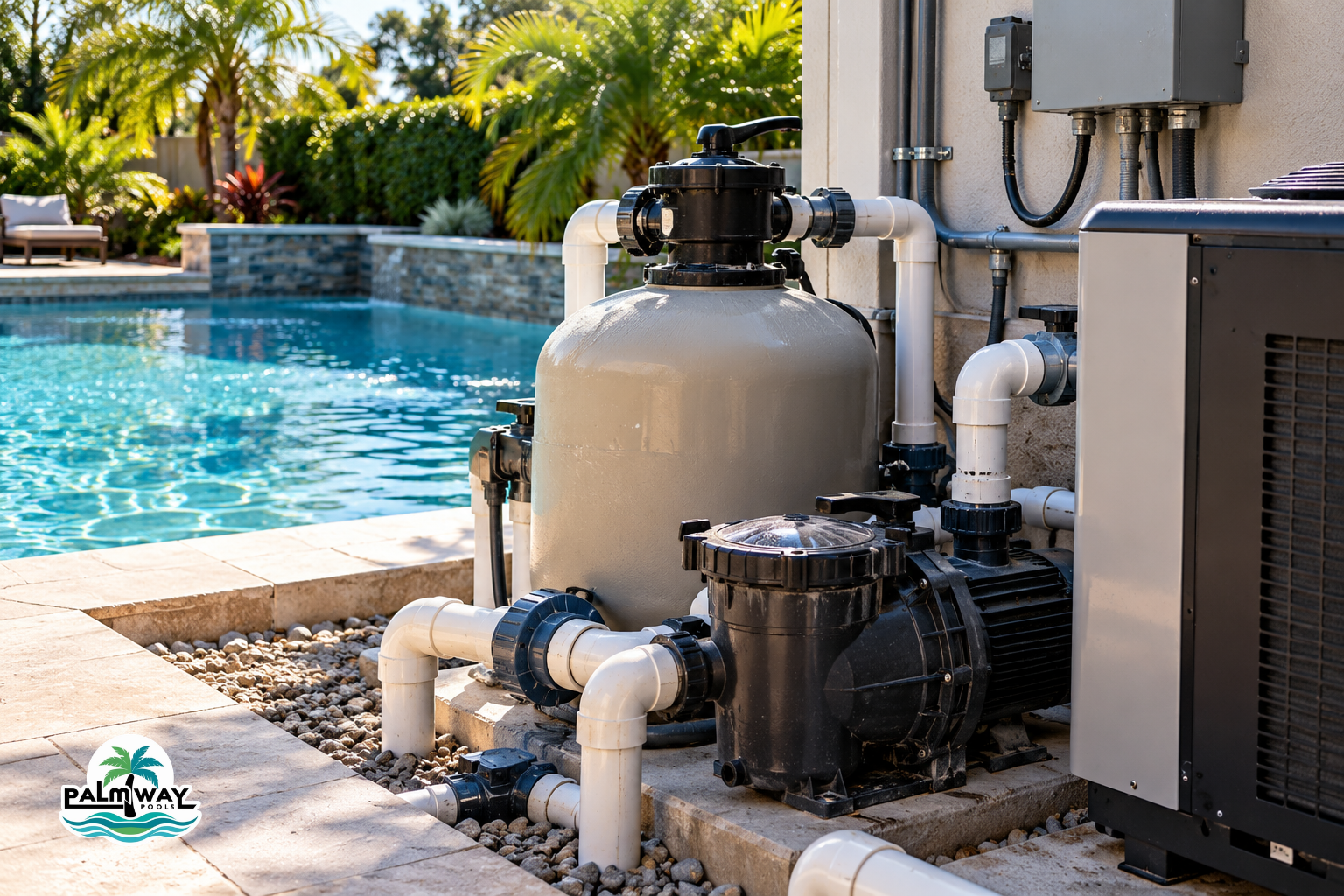
Water chemistry doesn’t work alone. If circulation is weak or filtration isn’t up to par, even a balanced pool can struggle to stay clear. That’s why pros also check pump output, skimmer performance, filter pressure, and water movement patterns.
Poor circulation can mean sanitizers don’t spread evenly, and debris might linger in corners. If needed, a service might include pump repair or pool filter replacement to ensure chemistry and circulation support each other.
Signs Your Pool Needs More Than a Quick Chemical Fix
Cloudy or Dull Water
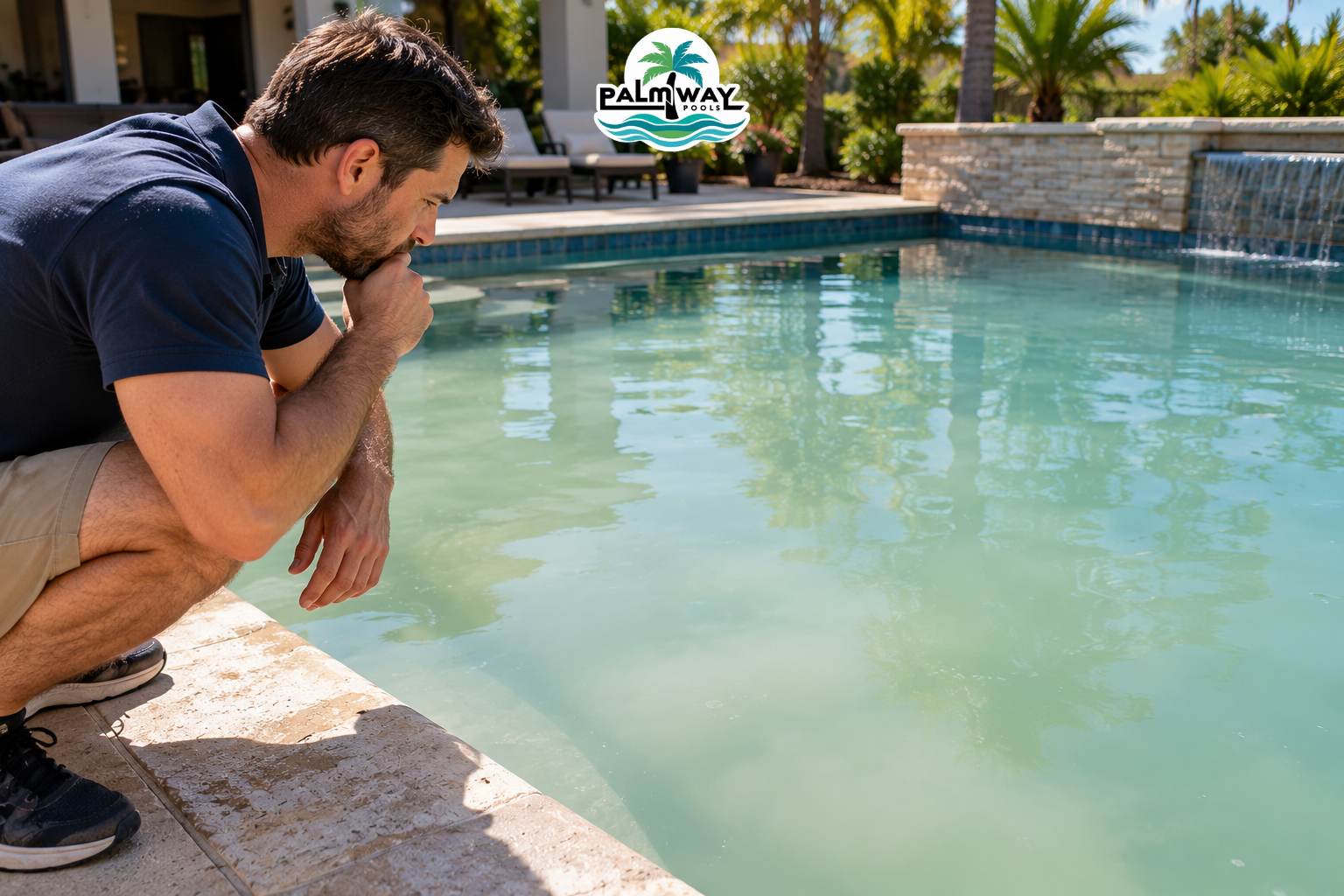
Cloudy water often signals something is off. It can stem from chemistry imbalance, a failing filter, poor circulation, or a buildup of particles the sanitizer can’t control. If it keeps coming back after treatment, the issue might be deeper than just chlorine loss.
That’s where a complete maintenance approach comes in. A mix of inspection, cleaning, and balancing often solves the real problem instead of masking it. Check out our guide to fixing cloudy pool water after cleaning for more insights.
Strong Chemical Odor or Irritation
A strong pool smell doesn’t always mean too much chlorine. Often, it means the sanitizer is reacting with contaminants and struggling. This can happen after heavy use or storms.
If swimmers mention eye irritation or dry skin, the pool might need more precise balancing, not more chemicals. Professional testing can show if the water is truly sanitized or overloaded with byproducts.
Scaling, Stains, or Rough Surfaces
Scale and stains often signal that water chemistry has been off for a while. White buildup on tiles, rough surfaces, and discoloration can point to mineral problems or poor balance. These issues may start small but become much tougher to fix if ignored.
In severe cases, the pool might need a reset treatment to restore the finish and improve the water environment. For pools with heavy buildup, a pool drain and acid wash can refresh the surface while a new balancing plan keeps the same issues from returning.
How Professional Balancing Boosts Maintenance Efficiency
Less Wasted Time and Fewer Surprises
One big benefit of professional balancing is predictability. Instead of reacting to green water, scaling, or sudden cloudiness, you can stay ahead with regular adjustments. That means fewer emergency fixes and more time enjoying the pool.
For busy folks, this is especially valuable during peak season. A pool that gets steady care is less likely to force a weekend shutdown or a last-minute service call before guests arrive. That convenience makes professional care worthwhile.
Lower Strain on Equipment
Balanced water helps pumps, heaters, and filters run better. When chemistry is stable, equipment doesn’t suffer from extra stress like scale or corrosion. Over time, that cuts down on maintenance costs and puts off big replacements.
If your system is showing signs of trouble, a technician might suggest pump replacement or pool heater repair before the problem spreads. Early action is usually cheaper than letting one issue cause a chain reaction.
Better Results from Every Cleaning Visit
Even the best cleaning schedule works better when the chemistry is right. Balanced water makes vacuuming, brushing, skimming, and filtration more effective because the system isn’t fighting constant instability. This leads to a cleaner look and a more enjoyable swim.
This is why many pool owners opt for a recurring plan that combines cleaning with chemistry checks. Professional pool service focuses on the big picture, so each visit builds on the last instead of starting over.
Why Professional Help Outshines Guesswork
Experience Matters When the Numbers Are Close
Pool chemistry might look simple, but real-world conditions can complicate things. Rain, heat, heavy use, debris, evaporation, and refill water all affect the numbers. A pool balanced yesterday might need a tweak today.
Professional technicians interpret small changes before they become visible problems. That experience helps prevent over-treatment, wasted chemicals, and stress for the owner.
Better Timing for Florida Conditions
In a warm, humid climate, pools face more environmental pressure. High temperatures can speed up sanitizer loss, and sudden storms can dilute chemistry or add contaminants. A professional service plan adjusts to these shifts with a schedule that fits the local environment.
If you live in a coastal or high-use area, you know how quickly conditions change. That’s why homeowners in this region often benefit from regular pool cleaning and frequent balancing compared to milder climates.
A More Complete View of Pool Health
Professional balancing isn’t just about chemistry. It’s also a diagnostic tool. When a pool repeatedly goes off balance, it might hint at deeper issues like poor circulation, worn equipment, or excess contamination.
This broader view helps protect the entire pool system. Instead of treating symptoms one by one, the service plan addresses the relationships between water quality, equipment performance, and long-term reliability.
What a Smart Maintenance Plan Looks Like
Weekly and Biweekly Routines
The best maintenance plans are consistent. Weekly or biweekly visits let a technician check water balance, inspect equipment, clear debris, and catch issues before they grow. This steady rhythm keeps water stable and reduces the chance of big swings.
For many homeowners, consistency matters more than dramatic fixes. A routine plan creates fewer headaches because the pool is adjusted before it becomes a problem. That’s the practical benefit of preventive care.
Seasonal Adjustments
Pool chemistry changes throughout the year. Warmer weather, rain, increased use, and changing sunlight all affect water balance. A smart plan accounts for these shifts instead of treating the pool the same way every season.
Seasonal service is also a good time to check heaters, filters, and pumps. If your pool or spa needs broader care, spa and hot tub maintenance can keep every water feature on your property ready to use.
Documentation and Follow-Through
A reliable service provider tracks what was tested, adjusted, and what needs attention next. That record helps identify patterns and keeps the pool from getting stuck in a cycle of the same repeated problem. It also gives owners a clearer picture of their system’s behavior over time.
Well-documented maintenance is especially valuable for rental properties and busy households. It turns maintenance from guesswork into a process, keeping pool days easy and fun.
Common Questions About Water Balancing
How Often Should Pool Water Be Balanced?
Most pools need regular checks, often weekly or every other week, depending on usage and weather. Pools with heavy use or frequent rain might need more attention. The more variable the conditions, the more useful professional monitoring becomes.
Can I Balance My Pool Myself?
Many homeowners can handle basic testing and add chemicals, but professional balancing offers a more complete and accurate approach. It reduces the risk of overcorrecting and helps identify hidden issues that home testing kits might miss. If your pool has recurring problems, professional service is usually the smarter choice.
Why Does My Pool Still Look Bad After Adding Chemicals?
If your pool still looks cloudy or dull, the issue might involve filtration, circulation, debris load, or a deeper chemistry imbalance. Chemicals alone can’t solve every problem. That’s why a full inspection is often more effective than another round of guesswork.
If a pump, filter, or heater is part of the issue, a technician may suggest pump repair or pool filter replacement to restore proper system performance.
Make Pool Days Better With a Professional Partner
More Enjoyment, Less Maintenance Stress
When water is professionally balanced, pool days become a breeze. Spend less time worrying about clarity, comfort, and equipment problems, and more time enjoying the water. That’s the real value of expert maintenance: it simplifies ownership while enhancing the experience.
Professional balancing also helps protect the long-term condition of the pool. By keeping chemistry stable, you reduce wear, avoid common problems, and keep your system running smoothly.
Support That Fits Your Property
Every pool is unique, which is why one-size-fits-all care rarely works. The right maintenance plan should reflect the pool's age, system size, usage, and equipment condition. A customized approach is more efficient and gets better results.
If your pool has ongoing issues or needs a fresh start, an experienced provider can recommend the right mix of cleaning, balancing, and repairs. This might include pool equipment repairs and upgrades to boost performance and cut future maintenance needs.
Take the Next Step
Professional water balancing is one of the easiest ways to enhance your pool experience. It supports clearer water, greater comfort, longer equipment life, and fewer problems. Most importantly, it turns pool care into something you can count on, rather than a constant hassle.
If you’re ready to make every pool day better, Palmway Pools - Pool Cleaning Services is here to help with reliable care, precise balancing, and practical support for your system. Contact us to build a maintenance plan that keeps your pool ready for everyday enjoyment and long-term value.