Your Guide to Upgrading Old Pool Equipment: When to Stop Repairing
Pool equipment won't last forever, and at some point, every pool owner wonders if it's time to upgrade instead of repair. If your system's making odd noises, losing efficiency, or constantly needing attention, a new upgrade might be the best solution. It can save you money, reduce hassle, and make owning a pool more enjoyable.
This guide helps you figure out when your pool gear is past its prime, what signs to watch for, and how to weigh repair costs against replacement value. If you're dealing with frequent issues, professional pool equipment repairs and upgrades can help you make an informed choice before a minor issue turns into a major problem. For those comparing ongoing care options, pool service is often the easiest way to keep everything running smoothly while you decide.
According to the U.S. Department of Energy, small efficiency gains in equipment add up over time, especially for systems that run frequently. For more on pool safety and maintenance, check out the CDC Healthy Swimming program for useful insights on why circulation, filtration, and sanitation are so important.
Why Old Pool Equipment Starts Costing More
It Wears Out Over Time
Pool systems work hard, especially in warm areas where pumps, filters, and heaters run often. Over time, seals dry out, parts wear down, and electrical components become less reliable. Even if one repair gets it working again, the system's age usually means another issue isn't far off.
That's why old equipment often becomes more costly in stages rather than all at once. You might start with a simple pump repair, then need a capacitor, then a leak fix, and so on. When service calls become frequent, the equipment is no longer just being maintained; it's slowly losing its value.
Hidden Costs from Energy Use
Older pool equipment often uses more electricity than newer models. A worn pump might need longer run times to move the same amount of water, and an outdated heater may struggle to reach desired temperatures. These extra run times increase your utility bills, even if the equipment still functions.
This is often the tipping point for many homeowners. A unit that costs less to repair may still be more expensive to operate each month than a newer, efficient replacement. If your equipment looks old and your bills are rising, consider comparing repair costs to long-term savings instead of just the immediate invoice.
Performance Loss Affects Everything
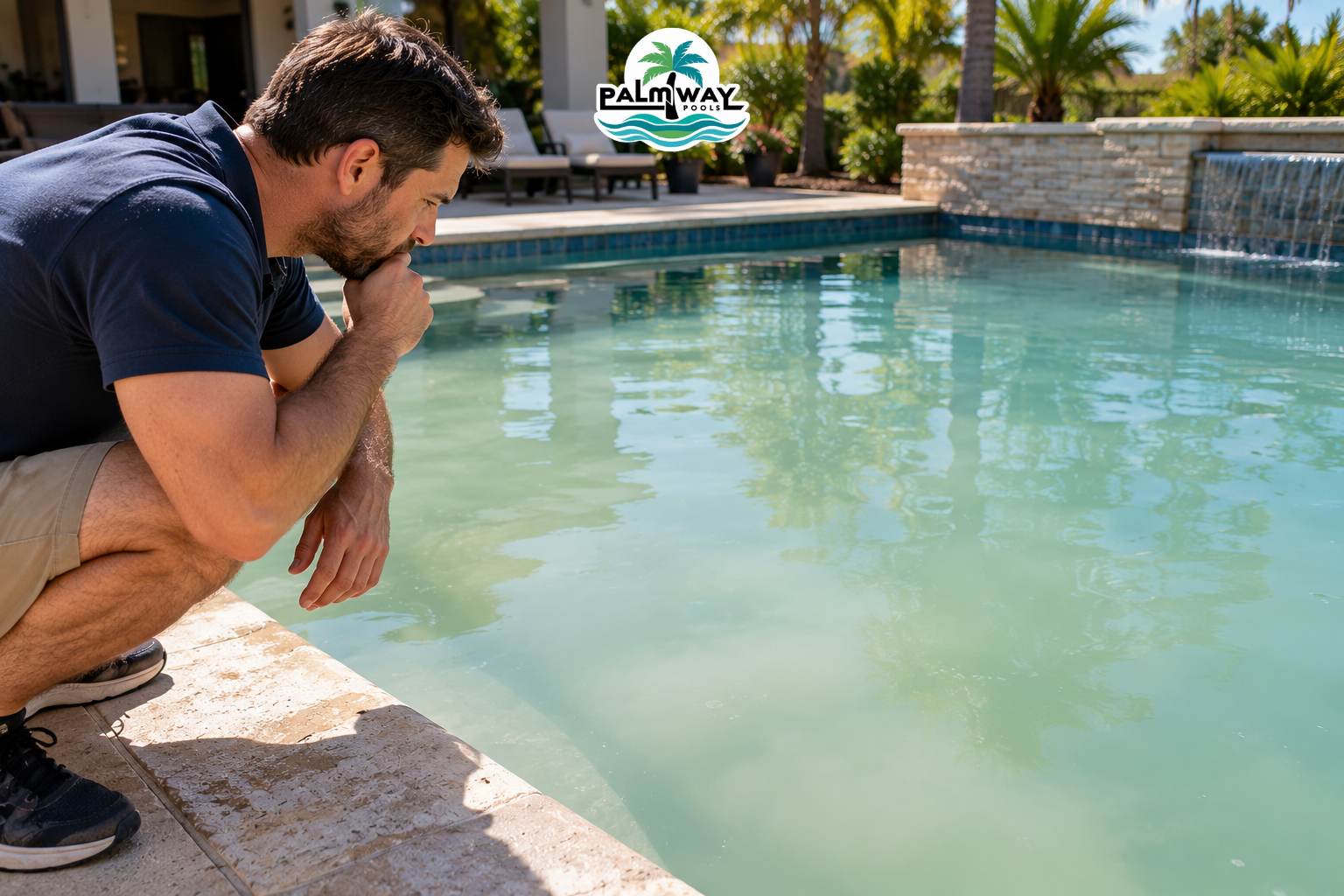
When one piece of equipment doesn't perform well, the entire pool system feels it. Weak circulation can lead to cloudy water, poor chemical distribution, algae growth, and added strain on the filter. A failing heater can shorten the season you use the pool comfortably. A tired pump can make every other part of the system work harder than it should.
This is why equipment decisions shouldn't be made in isolation. A repair might fix today's symptom, but if the equipment isn't supporting healthy circulation and balanced water, the better choice may be an upgrade that restores the whole system.
When a Repair No Longer Makes Sense
Frequent Breakdowns
If you're calling for service multiple times each season, the equipment is sending you a message. Repeated failures often signal deeper wear that a single repair can't solve. The more you fix the same unit, the less sense it makes to keep investing in it.
A practical rule is to review the total repair history over the past 12 to 24 months. If the combined costs are approaching a large percentage of replacement value, a new unit might be the wiser financial decision. This is especially true for pumps and heaters, where efficiency and reliability are key.
Noise and Inconsistent Operation
Loud grinding, screeching, humming, or rattling are never good signs. These issues often point to bearings, motors, or other components nearing failure. While some noise problems can be repaired, older units often continue to deteriorate even after the immediate issue is addressed.
Another warning sign is inconsistent performance. If a pump starts and stops unevenly, a heater heats only part of the time, or a filter seems to lose pressure without explanation, the equipment might be too unstable to rely on. Reliability is one reason owners choose replacement over another repair.
Parts Are Hard to Find
Once a manufacturer stops supporting a model, repairs become slower and more expensive. Specialty parts may need to be ordered, and some components may be unavailable. That can turn a minor problem into a long delay, especially during peak season.
At that point, replacement usually becomes the most practical choice. Modern systems are designed with more accessible parts, clearer diagnostics, and better compatibility with current controls. If your technician warns that the unit is becoming difficult to support, take that advice seriously.
Comparing Repair vs. Replacement
Use a Total Cost Approach
Many homeowners focus only on the immediate repair estimate, but that's only part of the picture. The question isn't "Can this be fixed?" but "How much more will I spend keeping this equipment going over the next few years?" Include labor, future visits, higher energy use, and the risk of sudden failure in your calculation.
In many cases, a replacement with better efficiency and warranty coverage ends up being the lower-risk option. If the repair is small and the unit is still relatively young, repair may make sense. If the equipment is older, inefficient, and already patched several times, replacement often delivers better value.
Age vs. Condition
Equipment age is a useful guide, but it shouldn't be the only factor. A well-maintained pump may last longer than expected, while neglected equipment can fail early. The best decisions come from looking at age, service history, performance, and how critical the unit is to the overall pool system.
For example, if you rely on regular pool cleaning and balanced chemistry, you may extend the life of some components. On the other hand, if the system has had poor circulation, recurring algae, or chemical instability, the stress on the equipment may justify replacement sooner.
Think About the Whole System
Upgrading one component can improve performance across the entire pool. A more efficient pump may enhance circulation and reduce filter strain. A new filter can improve water clarity and help the sanitizer work better. In some cases, updating two related parts at the same time avoids repeated labor charges and creates a more balanced system.
That's why professionals often recommend looking at the equipment as an integrated network. If one failure has already exposed weaknesses elsewhere, the best solution may be a coordinated plan instead of a one-by-one repair cycle. This approach also makes it easier to schedule pool filter replacement or other upgrades in a way that fits your budget and season.
What to Upgrade First
Pumps and Motors
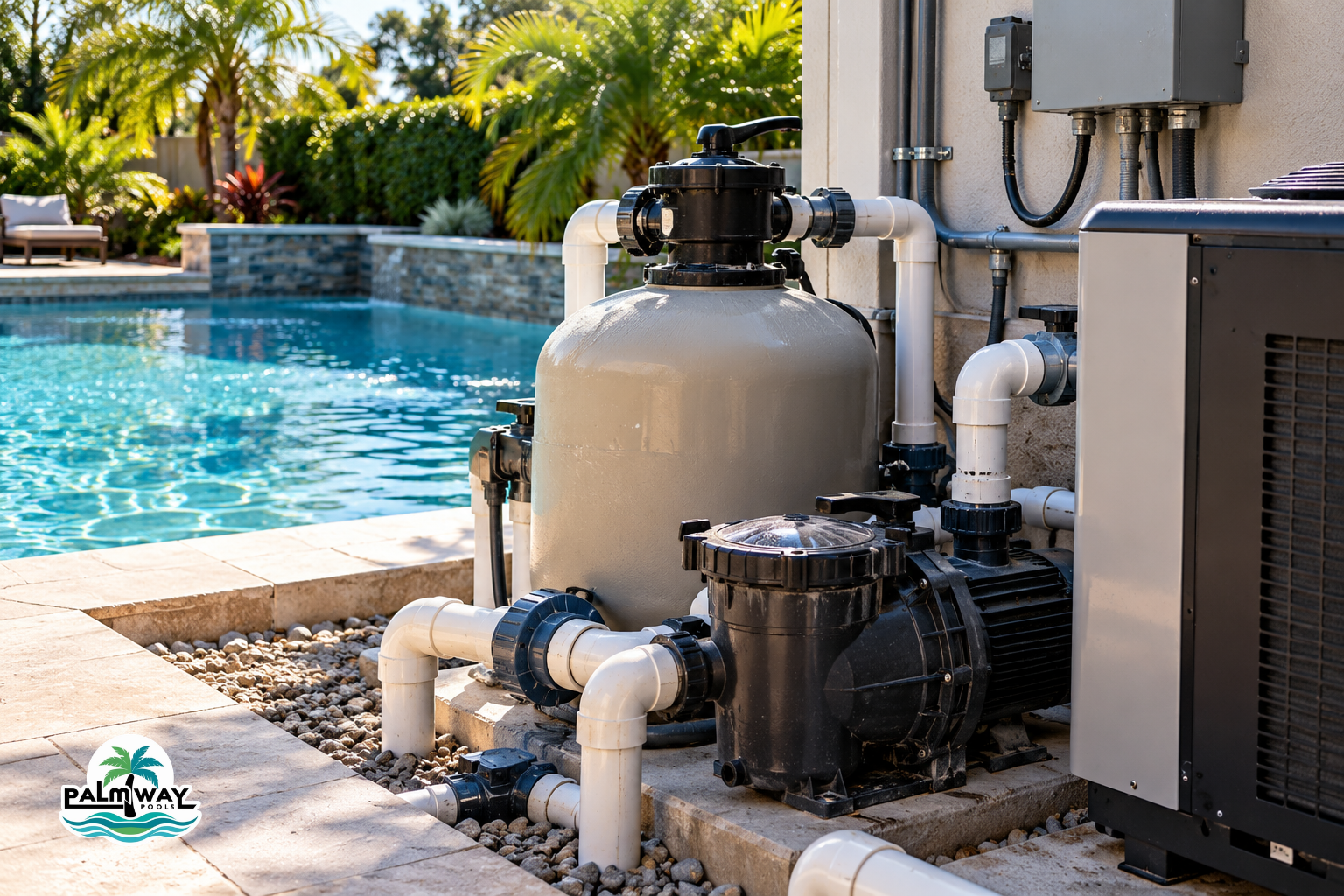
Pumps are often the first place to look because they influence circulation, filtration, and overall water quality. An inefficient or unreliable pump affects nearly every other system in the pool. If your current unit is loud, weak, or expensive to run, a modern replacement may pay off faster than expected.
In some cases, a straightforward pump replacement can solve recurring flow issues, reduce electrical use, and make daily maintenance easier. If the pump housing or plumbing layout is still in good shape, upgrading the motor or unit can deliver immediate benefits without a full system overhaul.
Filters
Filters are another high-priority upgrade because they directly affect water clarity. A worn filter may still “work,” but if it requires constant cleaning, struggles to trap fine debris, or causes weak flow, it may be past its best years. Poor filtration also forces other equipment to work harder, especially the pump.
If you're noticing cloudy water more often than usual, a replacement may be more effective than repeated cleaning alone. A refreshed filtration setup can improve comfort, reduce chemical demand, and make the pool easier to manage throughout the season.
Heaters
Heaters usually become obvious candidates for replacement when they struggle to start, heat unevenly, or leak. Because heaters involve fuel, electrical components, and water flow, aging units can become inefficient quickly. Minor repairs may help for a while, but repeated heating problems often mean the system is nearing the end.
Professional pool heater repair can help determine whether the issue is isolated or part of a broader failure pattern. If the unit is old enough that repair parts are becoming scarce, then pool heater replacement may be the more reliable long-term answer.
When Upgrades Save Money
Lower Utility Use
Modern equipment is designed for better efficiency, and that efficiency can be felt in monthly operating costs. Variable-speed pumps, improved heaters, and updated filtration systems are all examples of technology that can reduce waste. Even if the upfront purchase is higher, the long-term savings may outweigh the repair route.
This is particularly helpful for owners who run their pool year-round or use it heavily during warm months. When energy usage is a major concern, choosing an upgrade over another repair can be the smarter financial move because it addresses the cost of ownership, not just the immediate malfunction.
Fewer Emergency Calls
Older equipment often creates a cycle of emergency service. That means more downtime, more scheduling headaches, and a greater chance of a complete breakdown during peak usage. New equipment reduces those surprises and gives you a more predictable maintenance routine.
Predictability matters because pool ownership should feel enjoyable, not stressful. If you are already investing in ongoing pool service, combining that care with better equipment can lower the number of urgent fixes and keep the system operating more smoothly.
Better Water Quality
Upgraded equipment does more than prevent breakdowns. It can improve the feel of the water, stabilize circulation, and help chemicals distribute more evenly. The result is often clearer water, fewer imbalances, and a more enjoyable swimming experience overall.
That improvement is not just cosmetic. Better circulation and filtration can support healthier swimming conditions, which aligns with the guidance shared by public-health resources such as the U.S. Environmental Protection Agency and the ASHRAE standards community on safe environmental and mechanical practices.
Real-World Examples
The Pump That Kept Failing
Consider a homeowner with an aging pump that needed service every year. First came a seal leak, then a motor issue, then recurring priming problems. Each repair seemed reasonable alone, but the total cost kept growing and the circulation never fully stabilized.
After replacing the pump, the homeowner saw stronger flow, shorter run times, and fewer water clarity issues. The new system also reduced strain on the filter, which lowered maintenance effort across the board. In hindsight, the upgrade would have been cheaper than years of piecemeal repairs.
The Heater That Only Worked Sometimes
Another common example is a heater that turns on inconsistently or takes too long to reach the set temperature. At first, many owners assume it is a minor repair, such as a sensor or ignition issue. But older heaters often have multiple failing parts, and one fix reveals the next problem soon after.
In that situation, replacement can be the cleaner solution. A new heater offers more dependable heat, easier operation, and better support from available parts. When paired with a proper maintenance routine, it also protects the rest of the pool equipment from unnecessary strain.
The Filter That Couldn't Keep Up
Filters age quietly, which makes them easy to ignore until the water becomes cloudy again and again. A filter that once handled normal debris may eventually fail to keep up with fine particles, especially if the pool has heavy use, storm debris, or recurring organic material. Cleaning helps, but it cannot restore worn media forever.
That's why a timely replacement can make such a difference. When paired with consistent maintenance and inspections, a new filter can improve clarity, support sanitizer effectiveness, and reduce how often you need to troubleshoot murky water. If you're already seeing the same issues after repeated service, it may be time to consider a replacement path rather than another short-term fix.
Making the Right Choice Before Spending
Ask the Right Questions
Before approving another repair, ask how old the equipment is, how many more issues are likely, and whether the current fix addresses the root problem. Ask if the part being repaired is still widely available and whether the unit is still energy efficient by modern standards. Those questions help shift the conversation from “Can it run?” to “Is it still worth owning?”
You should also ask whether any nearby equipment is being overworked as a result of the failing unit. Sometimes a small fault causes a larger chain reaction. A thoughtful inspection can reveal whether the issue is isolated or part of a broader decline.
Get a Maintenance Opinion
A good technician does more than replace parts. They look at how the entire pool system is functioning and whether the current equipment matches the pool’s demands. That type of opinion is especially valuable when you're deciding between a repair and an upgrade.
If you want a broader assessment, professional pool equipment repairs and upgrades can help you compare options based on condition, budget, and long-term value. The goal is not to sell a new unit unnecessarily. The goal is to avoid spending more on an aging system than the system is worth.
Plan the Upgrade Around the Season
Timing can make a big difference. If you know the equipment is near failure, replacing it before peak season is usually better than waiting for an emergency. A planned upgrade gives you more time to compare options, schedule service, and avoid a sudden interruption in pool use.
In Florida, where pools are used for much of the year, seasonal timing matters even more. Planning ahead helps you stay ahead of heat, storms, and heavy use. It also lets you coordinate repairs with routine cleaning, water balancing, and other maintenance tasks for a cleaner transition.
FAQs About Pool Equipment Upgrades
How Long Should Pool Equipment Last?
Life span varies by brand, usage, water chemistry, and maintenance quality. Some pumps and heaters last many years, while neglected or heavily used systems wear out sooner. Regular inspections and prompt repairs can extend life, but no equipment lasts forever.
Should I Repair a Unit That Is More Than 10 Years Old?
Not always. Age alone isn't a reason to replace something, but it becomes more important when repairs are frequent, efficiency is poor, or parts are becoming difficult to find. The best decision comes from weighing cost, reliability, and expected future life.
Can Upgrading One Part Improve the Rest of the System?
Yes. A more efficient pump, cleaner filter, or modern heater can reduce strain on other components and improve circulation. In many cases, one upgrade creates a noticeable improvement in water quality and operating stability.
What If I'm Not Ready for a Full Replacement?
That's common. You can start with an inspection, prioritize the most critical part, and build a replacement plan over time. A phased approach is often the most practical choice for homeowners balancing budget and urgency.
Conclusion: Choose the Best Option for Your Pool
Repair is the right answer when equipment is still relatively healthy, the issue is isolated, and the fix restores reliable performance. But when the same unit keeps failing, costs keep rising, or efficiency has dropped too far, an upgrade usually makes more sense than another repair. The smartest decision is the one that protects water quality, reduces stress, and lowers total ownership costs over time.
If your pool equipment is getting older and you are unsure what to do next, start with a professional assessment and compare the long-term numbers instead of focusing only on today’s invoice. Palmway Pools - Pool Cleaning Services can help you evaluate the condition of your system and guide you toward the most practical next step, whether that means repair, replacement, or a full equipment upgrade. For dependable care and honest advice, reach out to schedule service and keep your pool running the way it should.
To learn more or request help, visit Palmway Pools or call (844) 307-1680. If your system is already showing warning signs, now is the best time to act before a small problem becomes a costly emergency.