How Do You Know It's Time to Replace Your Pool Filter?
Your pool filter might be quietly doing its job in the background, but it's crucial for a clean and healthy pool. When it starts to fail, signs like cloudy water, weak circulation, increased chemical usage, and strain on other equipment may start appearing. Getting ahead of these issues can save you from major repairs and keep your pool inviting.
This guide will help you spot the signs of a failing filter, weigh cleaning versus replacement, and understand how different filter types age. We'll also share troubleshooting tips and when to bring in the pros for pool filter replacement or more comprehensive pool service to keep things running smoothly. If you're a homeowner in Treasure Island, FL, these insights will help you avoid turning small issues into big expenses.
Why Pool Filters Are More Important Than You Think
Filters Keep Your Water Safe and Clear
Pool filters capture dirt, oils, debris, and tiny algae particles that sanitizers can't fully remove. Without a good filter, even well-balanced water can look murky because particles stay suspended instead of being caught and removed. The result? An uninviting pool that needs more frequent cleaning.
The CDC emphasizes that filtration and sanitation are key to minimizing health risks in recreational water. So, a well-performing filter is not just about maintenance; it's about safety and comfort for swimmers. When filtration falters, pool care becomes a hassle.
Filters Support the Whole Pool System
Your pump pushes water through the filter, then sends it back into the pool. If the filter's media is worn out or beyond cleaning, the pump works harder, which can lead to noise, overheating, and wear. What looks like a pump issue might actually be a filter problem.
When you notice both weak flow and poor water quality, it might be time for pump repair or even pump replacement. A well-balanced system is easier to manage than one where parts struggle to make up for others.
Maintenance Extends Life but Not Forever
Cleaning, backwashing, and inspections can prolong a filter's life, but every filter has its limits. Over time, internal parts degrade, media becomes less effective, and pressure changes become more noticeable. Even a well-maintained filter will eventually need replacing.
That's why regular pool cleaning and inspections are invaluable. They help you know when a filter needs service or when it's time to replace it.
Signs Your Pool Filter Needs Replacement
Cloudy Water That Keeps Coming Back
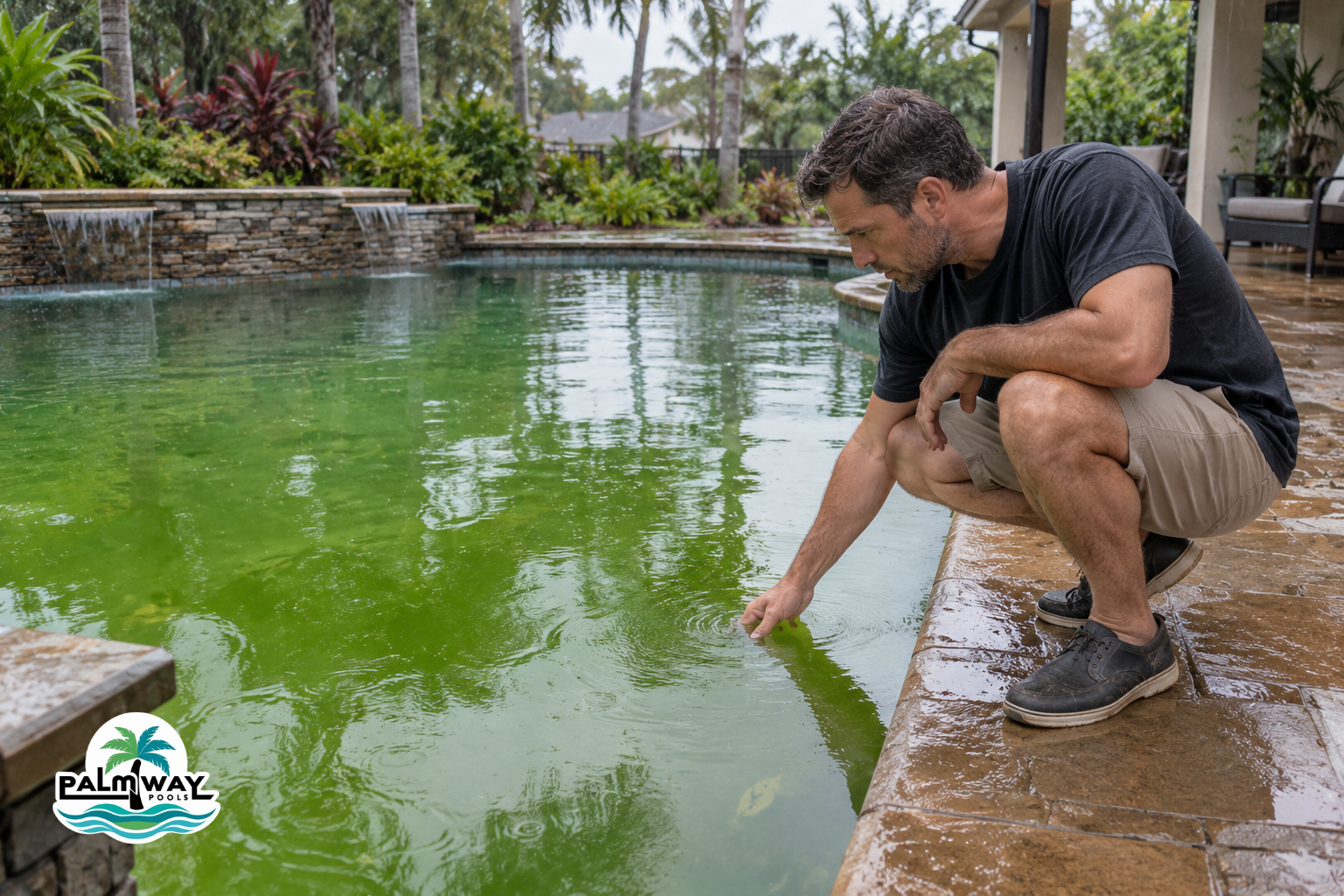
If your pool water stays cloudy despite balancing chemicals and regular cleaning, your filter might be failing. It may still move water, but it's not trapping fine particles effectively. If the water clears briefly and then clouds up again, the filter could be the issue.
This problem can be frustrating because it often seems like a chemistry problem. You might add chlorine, shock the pool, and brush the surfaces only to see that same haze return. If this keeps happening, the issue is probably mechanical.
Consistently High or Erratic Pressure
Most pool systems use a pressure gauge to show how well water is moving through the filter. If the pressure is too high, the filter might be clogged, damaged, or filled with debris that cleaning can't remove. Erratic pressure can also point to broken internal parts.
For cartridge and DE filters, persistent pressure issues might mean the media is too worn to work properly. For sand filters, it might mean the sand is rounded, compacted, or contaminated. In either case, replacing the filter can restore flow and ease the pump's workload.
Frequent Cleaning Needed
If you're cleaning your filter much more often than before, it might not have enough capacity to handle the pool's debris. While seasonal factors can increase cleaning needs temporarily, a lasting change often signals trouble. A healthy filter should handle a normal service interval without major performance loss.
Professionals often see this pattern with older equipment: owners report more frequent cleaning, but the pool doesn’t stay clear for long. This pattern usually means the system needs more than routine maintenance.
Physical Damage
Visible damage is a clear sign it's time to replace a filter. Cracks in the tank, damaged lids, warped seals, broken manifolds, or leaks typically mean the filter is near failure. Once the filter's structure is compromised, it can lead to bigger issues and potential water loss.
Don't ignore drips around the housing or wet areas near fittings. Even a small leak can indicate stress that might worsen quickly. If you notice rust, brittle plastic, or damaged O-rings, replacement is often the smarter move.
How Different Filters Age and Fail
Sand Filters Lose Efficiency
Sand filters are durable and simple, but the sand doesn't last forever. As it ages, the grains become smoother and less effective at trapping debris. Water might still pass through, but the pool can start to look dull even after backwashing.
The sand can also get contaminated with oils, scale, or fine sediment that backwashing can't remove. When this happens, filter replacement or a media change might be necessary. If your sand filter is old and has repeated clarity issues, replacement could offer better long-term value than repairs.
Cartridge Filters Wear Out
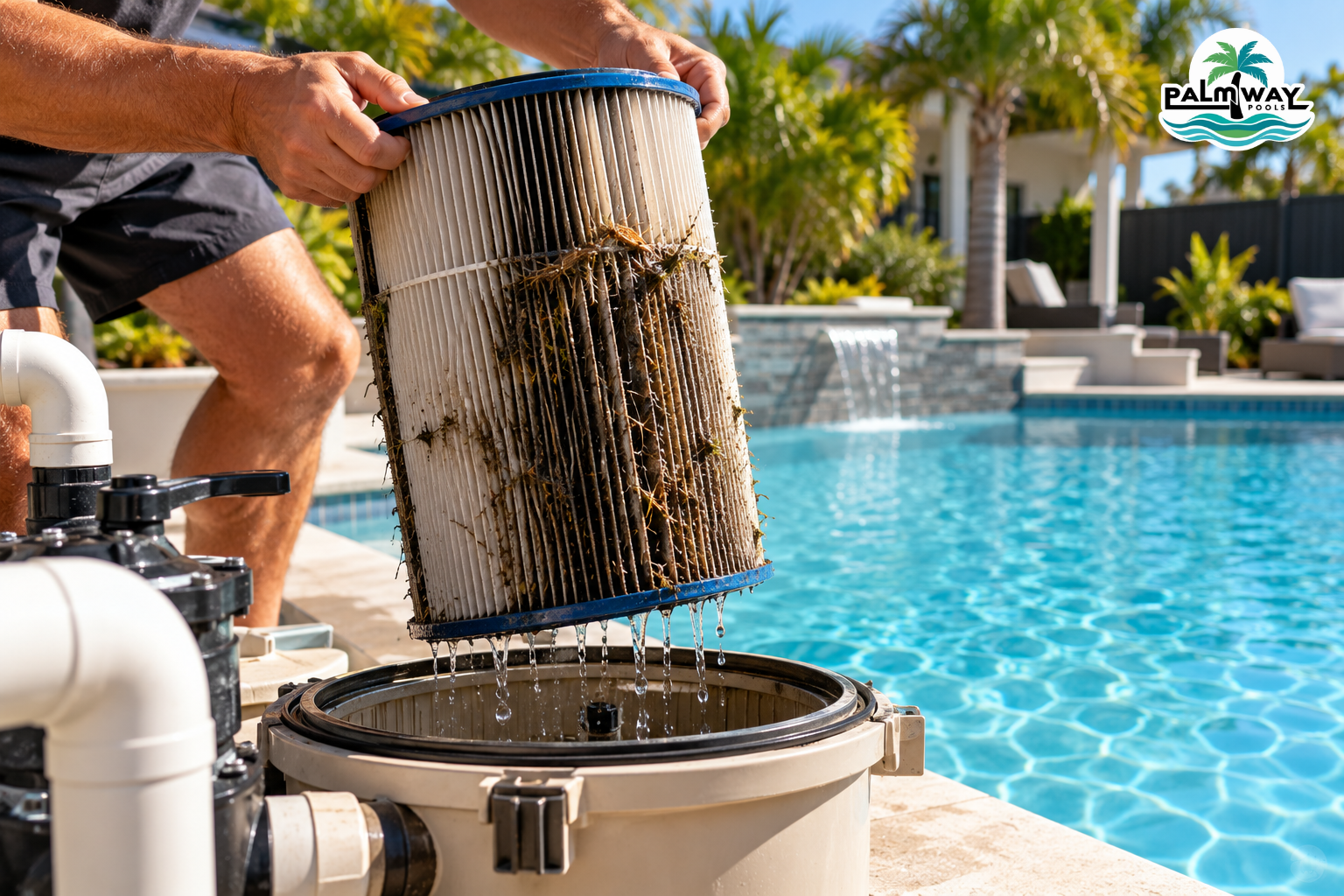
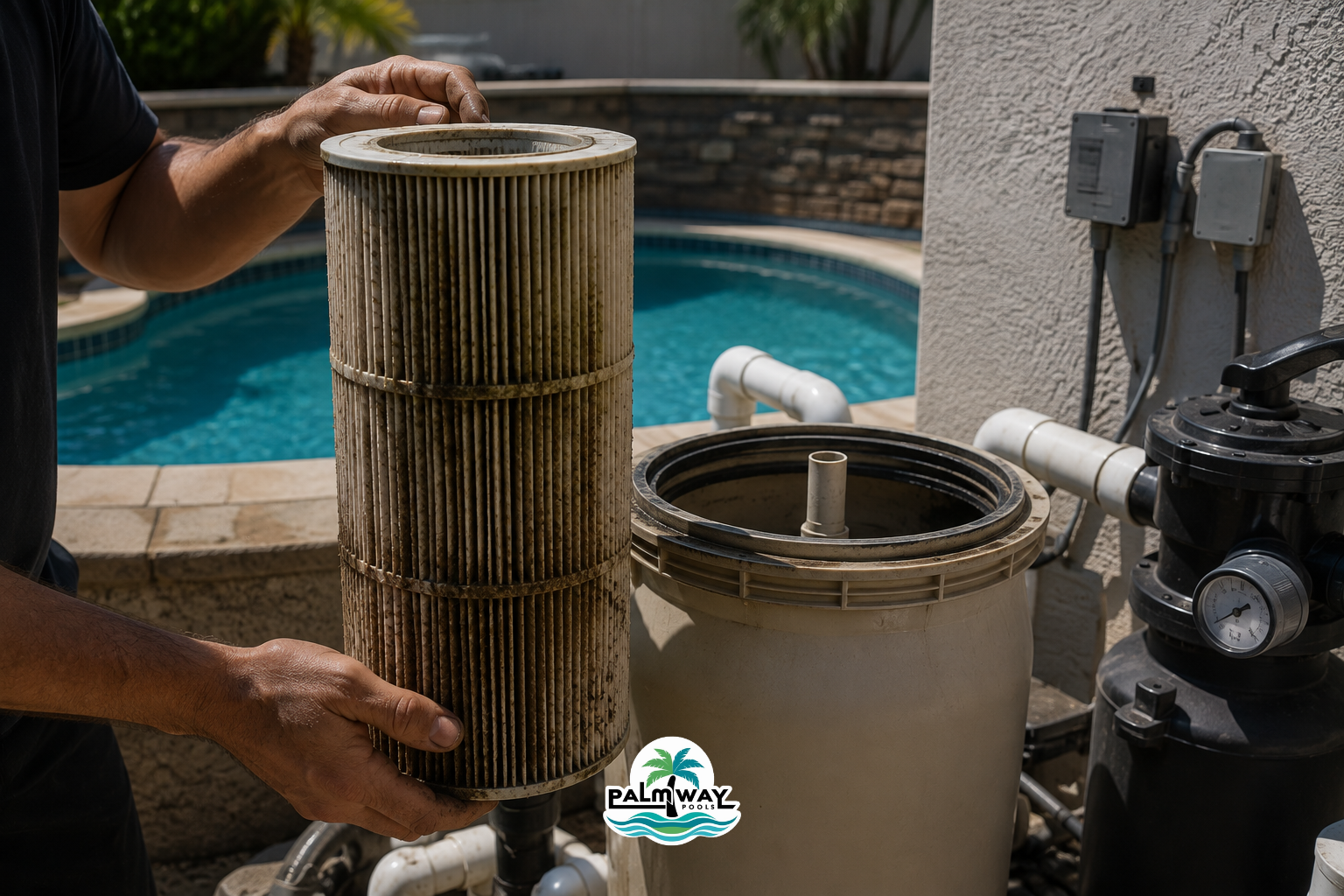
Cartridge filters are known for strong filtration and easy upkeep, but the cartridge itself breaks down over time. Pleats stiffen, fibers weaken, and cleaning might not restore flow. If the cartridge looks frayed or doesn't respond well to rinsing, it’s likely at the end of its life.
A worn cartridge can cause the pump to work harder and circulate less water. This affects skimming, sanitizing, and overall water quality. For those who rely on pool service, replacing the cartridge before it completely fails is often a cost-effective choice.
DE Filters Develop Wear and Tear
DE filters excel at capturing fine particles, but their grids and manifolds can wear out, crack, or get coated with residue that's hard to remove. When a DE filter works well, it should keep water crystal clear. When it starts failing, you'll usually notice the performance drop.
If DE powder returns to the pool or the filter needs frequent teardown with little improvement, internal damage might be the issue. In such cases, replacement might be the best solution.
Cleaning vs. Replacement: How to Decide
When Cleaning Works
Not all performance issues mean it's time to replace the filter. Sometimes a deep cleaning, hose-down, chemical soak, or backwash can fix the problem. If the filter has been neglected or exposed to unusual conditions like storms, a deep clean might be all it needs.
The key is whether the filter improves and stays improved after cleaning. If the water clears and pressure normalizes, cleaning was probably the right call. If symptoms return quickly, the filter is likely nearing the end of its life.
When Cleaning Isn't Enough
A filter that doesn't respond to maintenance is trying to tell you something. If your routine is consistent but the problem worsens, the internal structure or media might be too worn to work effectively anymore.
Experienced technicians can help compare repair options with replacement. If the filter demands constant attention and still performs poorly, replacement is often more practical and economical.
Consider Costs
It's tempting to keep fixing old equipment, but repair costs can add up quickly. New parts, labor, and repeated service calls might cost more than a new filter. Compare the next 12 months of repair expenses with the value of a reliable new filter.
If the filter is old, inefficient, or causing other system issues, replacement can cut operating costs by helping the pump work efficiently. Sometimes, owners choose pool equipment upgrades to improve the overall system at once.
What to Check Before Replacing Your Filter
Inspect the Pump and Circulation
Before replacing your filter, make sure the pump is working properly and there are no hidden circulation issues. A weak pump, clogged skimmer basket, blocked line, or air leak can mimic filter failure. Addressing the wrong issue first can waste time and money.
Sometimes it's best to inspect the whole system together. If there are signs of poor circulation, both filter and pump assessments might be needed for the best result. This is crucial when multiple warning signs appear.
Review Water Chemistry History
Poor water balance can accelerate filter wear. High calcium levels, repeated algae blooms, or ongoing sanitizer issues can leave residue inside the filter and shorten its lifespan. If chemistry problems have lingered, the filter might have been under stress.
For more on water balance and equipment care, the Pool & Hot Tub Alliance offers guidance connecting water chemistry and equipment longevity. A balanced pool is gentler on all components, including the filter.
Check Equipment Age
The filter's age often provides the biggest clue. Even if it looks fine outside, an older filter might have hidden internal damage. If you don't know when it was last replaced, a technician can estimate its condition based on wear and part integrity.
If the filter has passed its service life and has ongoing issues, replacement is often wiser than another repair cycle. This is especially true for frequently used pools or those with heavy debris loads.
Tips to Avoid Waiting Too Long
Notice Small Changes
Filter issues often start subtly. The water might look less clear after service, or the return jets might not feel as strong. These changes are easy to overlook, but they often appear long before a complete failure.
Keeping a simple maintenance log can help spot these trends. Note pressure readings, cleaning dates, and water appearance changes. When trends move in the wrong direction, it’s easier to decide on replacement.
Schedule Regular Inspections
Regular inspections offer expert opinions before problems worsen. A technician can check the filter housing, media, flow rate, seals, and pressure. This makes it easier to decide between restoring a part or replacing the unit.
For consistent oversight, a regular pool cleaning schedule can uncover early warning signs by keeping the system visible and well-monitored. What seems like a minor water issue is often the first sign of a bigger problem.
Replace Filters Before Peak Season
If your filter is borderline, don't wait for busy swimming months to act. Peak season stresses the pool, and a failing filter might not keep up. Replacing it during a quieter time lets you test the system and adjust.
This proactive approach helps prevent emergency calls, cloudy water complaints, and downtime. It's a simple way to keep the pool enjoyable and maintenance predictable.
Frequently Asked Questions About Pool Filter Replacement
How Often Should a Pool Filter Be Replaced?
This depends on the filter type, usage, water conditions, and maintenance routine. Sand, cartridge, and DE filters all last different lengths, but none last forever. Frequent problems mean replacement might be needed sooner than expected.
Instead of just considering age, focus on performance. A filter that can't maintain clear water or normal pressure is already signaling it's time to act.
Can a Bad Filter Make the Pool Unsafe?
Yes, poor filtration can let debris and particles stay in the water, making it harder for sanitizers to work. While chemistry is important, poor filtration can lower water quality and create challenges to keeping it healthy.
That's why timely care and replacement are crucial. The CDC highlights that clear, well-maintained pool water is vital for safe swimming, especially when pools are heavily used.
Should I Replace Just the Media or the Whole Filter?
Sometimes changing the media is enough, especially with sand or cartridge systems. But if the tank, housing, internals, or plumbing connections are failing, a full replacement might be better. The right choice depends on specific damage and repair costs.
If unsure, get a professional evaluation. A technician can explain whether repair, media replacement, or a full upgrade offers the best value.
When to Call a Professional
Persistent Cloudiness and Service Issues
If your pool stays cloudy despite proper cleaning and balancing, the filter might be the hidden problem. Repeating the same treatments without improvement often means it's mechanical. Professional testing can find the cause faster than guessing.
A technician can also determine if related services like pool drain and acid wash are needed to address severe staining or buildup.
Leaks, Cracks, or Equipment Strain
Never ignore a filter leak. Even a small crack can worsen under pressure, causing more damage to the system. If the pump sounds louder or the pool isn't circulating normally, get a professional inspection.
Sometimes, the best solution is combining repair and replacement to restore the entire system. This can be more efficient than treating each symptom separately.
Want a Long-Term Maintenance Plan
Many pool owners want more than a quick fix; they want a reliable plan to keep their pool in good shape year-round. That's where ongoing support is helpful. Services like spa and hot tub maintenance and regular pool care protect your investment.
Ready to stop guessing and start maintaining with confidence? Palmway Pools - Pool Cleaning Services can help evaluate your filter, identify performance issues, and recommend the right step for your pool.
Final Thoughts: Replace Your Filter Before It Causes Bigger Issues
Look for signs like persistent cloudy water, abnormal pressure, frequent cleaning, visible damage, and declining performance. When these symptoms stick around, replacement is usually more cost-effective than repeat service calls. A failing filter will eventually impact the whole pool system.
By noticing small changes early, comparing repair costs honestly, and scheduling professional inspections, you can avoid bigger problems down the line. If you think your filter is failing, now's the time to act. Contact Palmway Pools - Pool Cleaning Services to discuss your pool’s condition, review your options, and keep your water clean, efficient, and ready for fun.