Why Your Pool Turns Green After Heavy Rain
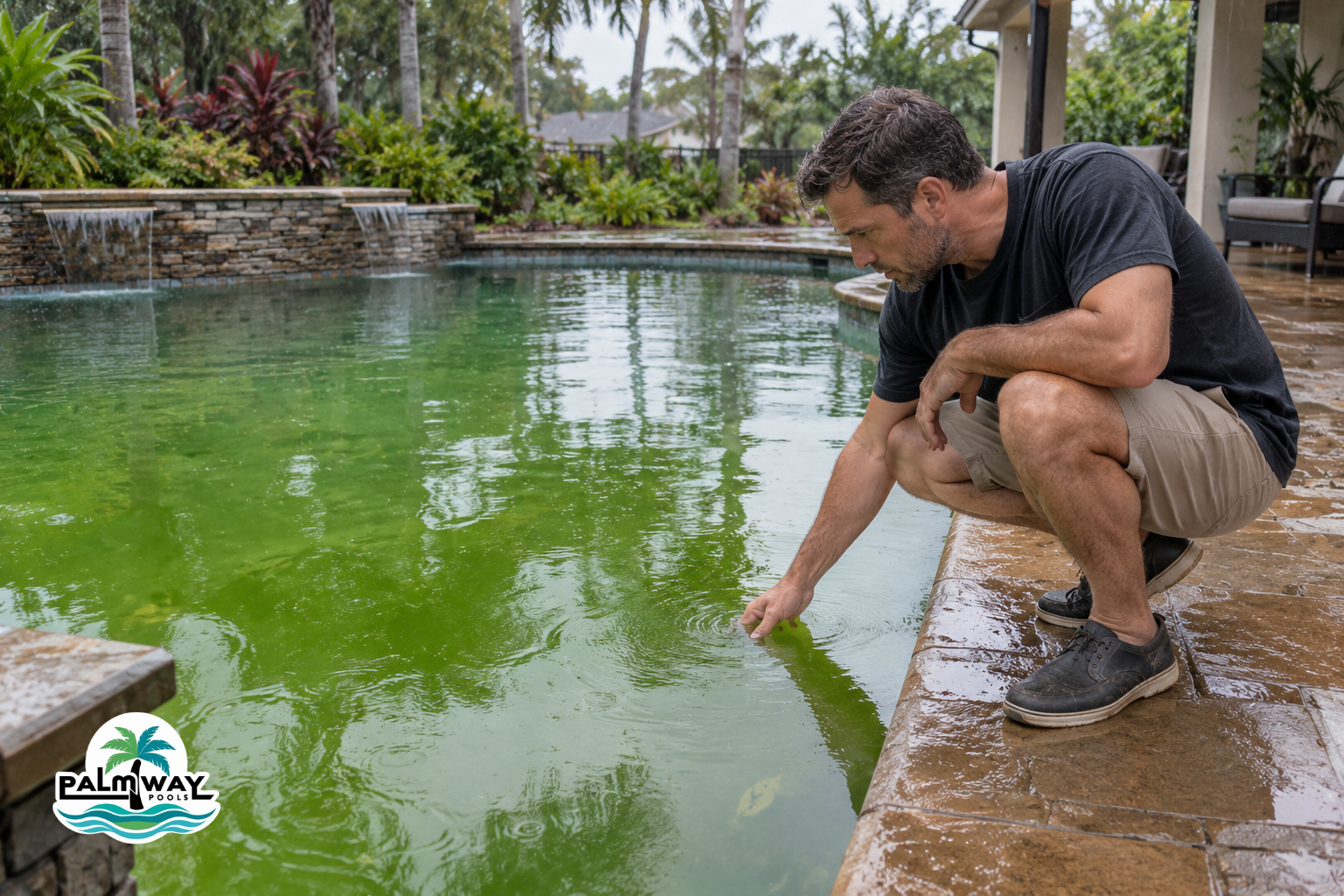
So, your pool was crystal clear, and then the rain came. Now it’s a swampy green mess. What happened? Well, rain can change your pool's water balance, bring in contaminants, or overwhelm your pool's system. The good news? It’s a common issue and one you can tackle with the right approach.
For pool owners looking to keep their water in check after a storm, regular pool cleaning and pool service can make a big difference. This guide will walk you through why rainwater might trigger algae growth, signs to watch for, and when to call in the pros. We’ll also cover how proper circulation, filtration, and chemical balance can help you avoid ending up with a green pool after the next storm.
First off, rain doesn’t just mix with your pool water. Storm runoff can carry in pollen, dirt, leaves, fertilizer residue, and more. All of these can feed algae and mess up your water’s sanitizer levels. The CDC highlights the importance of pool water chemistry and disinfection, especially after weather changes. That's why having a storm recovery plan is just as important as regular upkeep.
Why Does Heavy Rain Turn Pool Water Green?
Rainwater Dilutes Sanitizer Levels
Chlorine and other sanitizers have a sweet spot where they work best. A lot of rain can dilute these levels, giving algae the upper hand. If your pool was already low on chlorine, a storm can quickly turn things from "almost balanced" to "algae bloom."
This is especially true in warmer climates where algae grow fast. Often, the rain reveals an existing problem in your pool’s chemical balance, and algae are quick to take advantage.
Storm Runoff Brings in Nutrients and Debris
Rain can wash in organic material like leaves, grass, soil, and dust. While they might seem harmless, these give algae a food source and make your sanitizer work overtime. If fertilizers or other nutrient-rich stuff gets washed in, algae growth can speed up even more.
Windy storms might also blow fine debris into the pool, clogging skimmers or filters. If circulation slows, sanitizer distribution gets uneven, allowing algae to spread. A slightly cloudy pool can turn green in a day or two if the system isn’t cleaned and rebalanced promptly.
Circulation and Filtration Get Overwhelmed
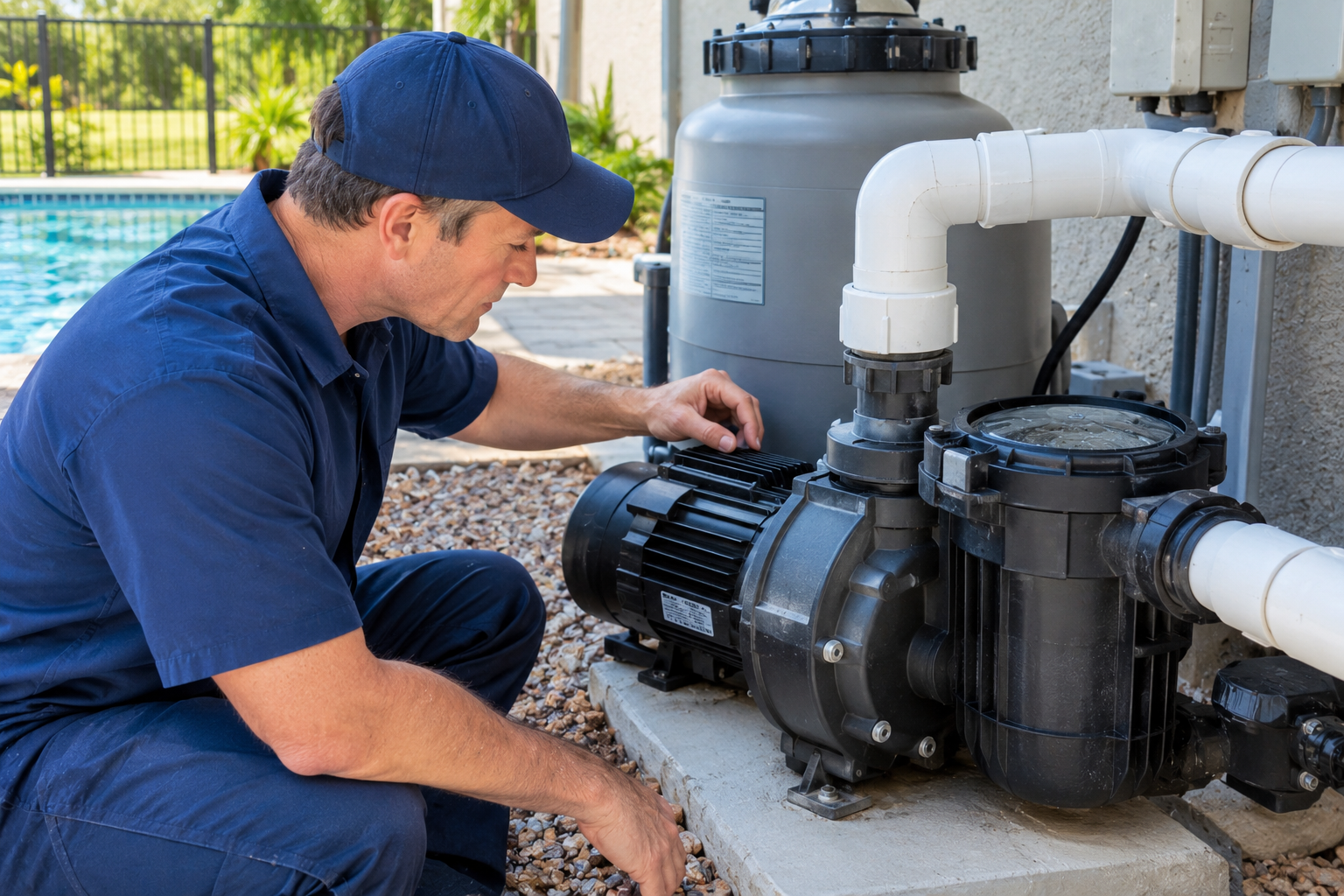
Heavy rain can push your pool’s equipment to its limits. If your pump is weak or the filter dirty, extra debris from the storm can make the system even less effective. Poor water movement means chemicals don’t circulate well, and algae can flourish.
Think you might have an equipment issue after a storm? Check out our pool pump repair and replacement guide for warning signs like weak flow or strange noises.
What to Do When Your Pool Turns Green
Skim, Clear, and Remove Debris
Your first move is to get rid of as much debris as possible. Skim the surface, empty baskets, and remove any leaves or branches. Less organic material means less food for algae.
Check the waterline and pool bottom for buildup. Leaving debris can worsen the water condition. This initial cleaning sets the stage for everything else you’ll do.
Test Your Water Chemistry
Once debris is gone, test the water for chlorine, pH, alkalinity, and stabilizers. This helps pinpoint why your pool changed so quickly. Low sanitizer or low pH are typical storm-related issues.
For deeper insights, look at our pool water chemistry guide. Our pool water health article also breaks down warning signs that often appear before the water turns green.
Shock the Pool if Needed
If sanitizer levels are low and algae are visible, shocking the pool might be necessary. This process boosts the water’s oxidizing power to break down contaminants. Timing is key because algae multiply fast in warm water.
Don’t guess the dosage or add chemicals without checking labels. Over-treating can cause irritation, cloudiness, and imbalance. If unsure, it’s better to get professional help than to risk a bigger problem.
How Pool Chemistry Changes After Heavy Rain
pH Can Shift Quickly
Rain is usually a bit acidic, which can lower your pool’s pH. Low pH makes chlorine less effective and pool surfaces more prone to corrosion, complicating algae control.
Low pH can also irritate swimmers if they enter the pool before adjustments. After severe storms, retest the pool the next day as chemistry can continue to drift.
Alkalinity Buffers Can Be Disrupted
Alkalinity helps stabilize pH. Big storms can weaken this buffer, making pH harder to control. This instability makes it tough for sanitizers to work properly.
Technicians often start with alkalinity when diagnosing storm-related issues. If your pool keeps turning green, the real problem might be the unstable balance allowing algae to thrive. Check out NSF water quality resources for more on why balanced treatment matters.
Stabilizer and Sanitizer Levels Need Attention
In outdoor pools, stabilizers shield chlorine from sunlight. Heavy rain can disrupt this balance, especially if the pool was already low on chlorine. If stabilizer and sanitizer levels fall out of sync, your pool might look fine one day and turn green the next.
This is where regular service pays off. A consistent maintenance schedule catches minor chemistry shifts before they become major algae problems. Ongoing pool service helps keep water stable even when the weather is unpredictable.
Equipment Issues That Can Lead to Green Water
A Weak Pump Can’t Move Water Properly
After heavy rain, your pool pump works harder to circulate the water. If the pump is weak or inefficient, water may stagnate in spots where algae can grow. Poor circulation is a quick way for clear water to turn green.
Watch for weak returns, strange noises, air bubbles, and long run times. If these show up after a storm, the problem might be mechanical, not just chemical. In such cases, a repair or upgrade may be wiser than repeated chemical treatments.
A Clogged or Worn Filter Fails to Catch Fine Particles
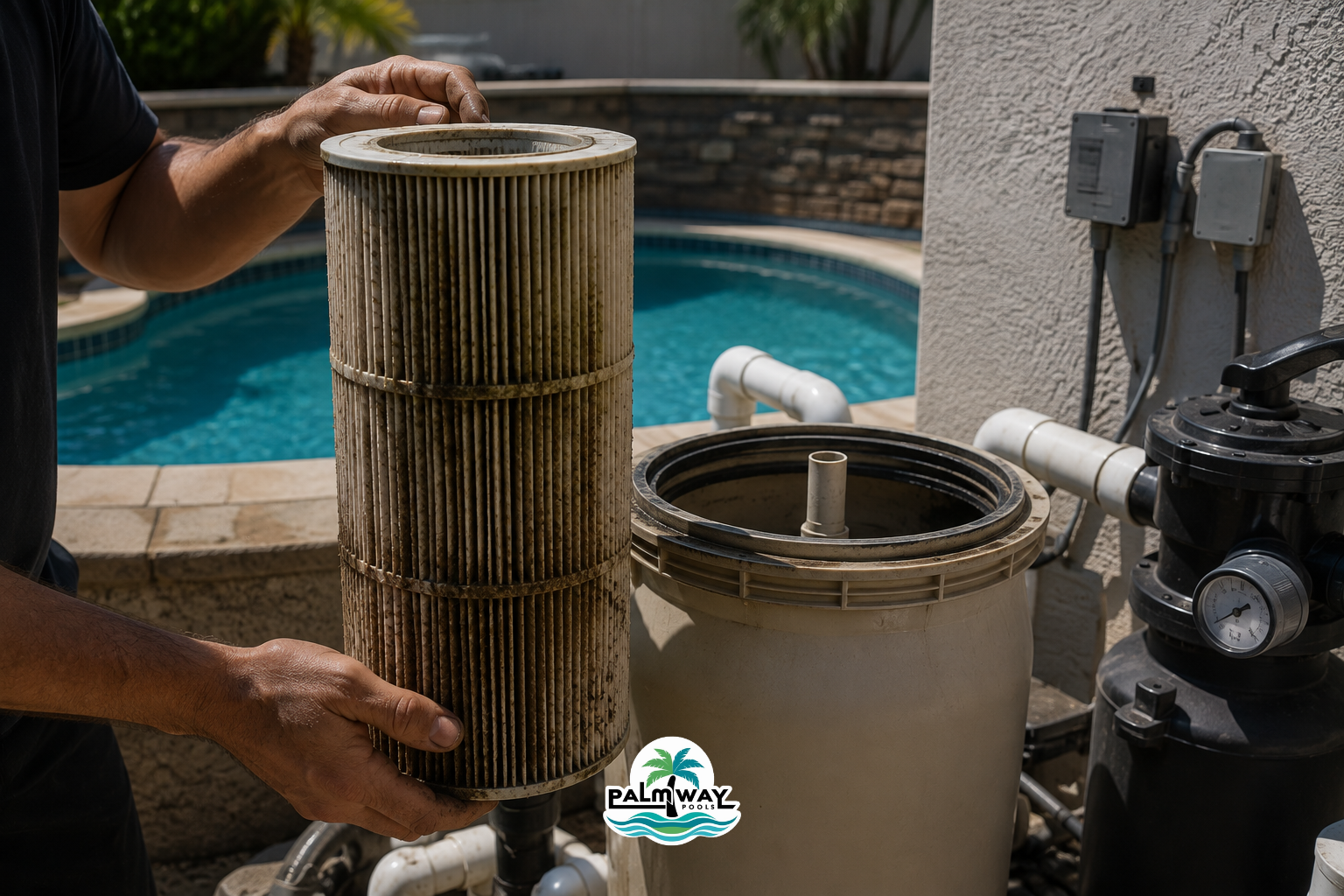
Filters catch the tiny debris skimming misses. After rain, filters can get overloaded, especially if loads of dirt and organic matter hit the pool at once. A worn or cracked filter might let fine particles back into the water.
This is why filter condition is crucial after storms. A clean filter restores clarity faster and aids chemical treatments. Unsure if cleaning is enough? Our filter replacement guide can help you decide if it’s time for a pool filter replacement.
Heater and Other Components May Be Indirectly Affected
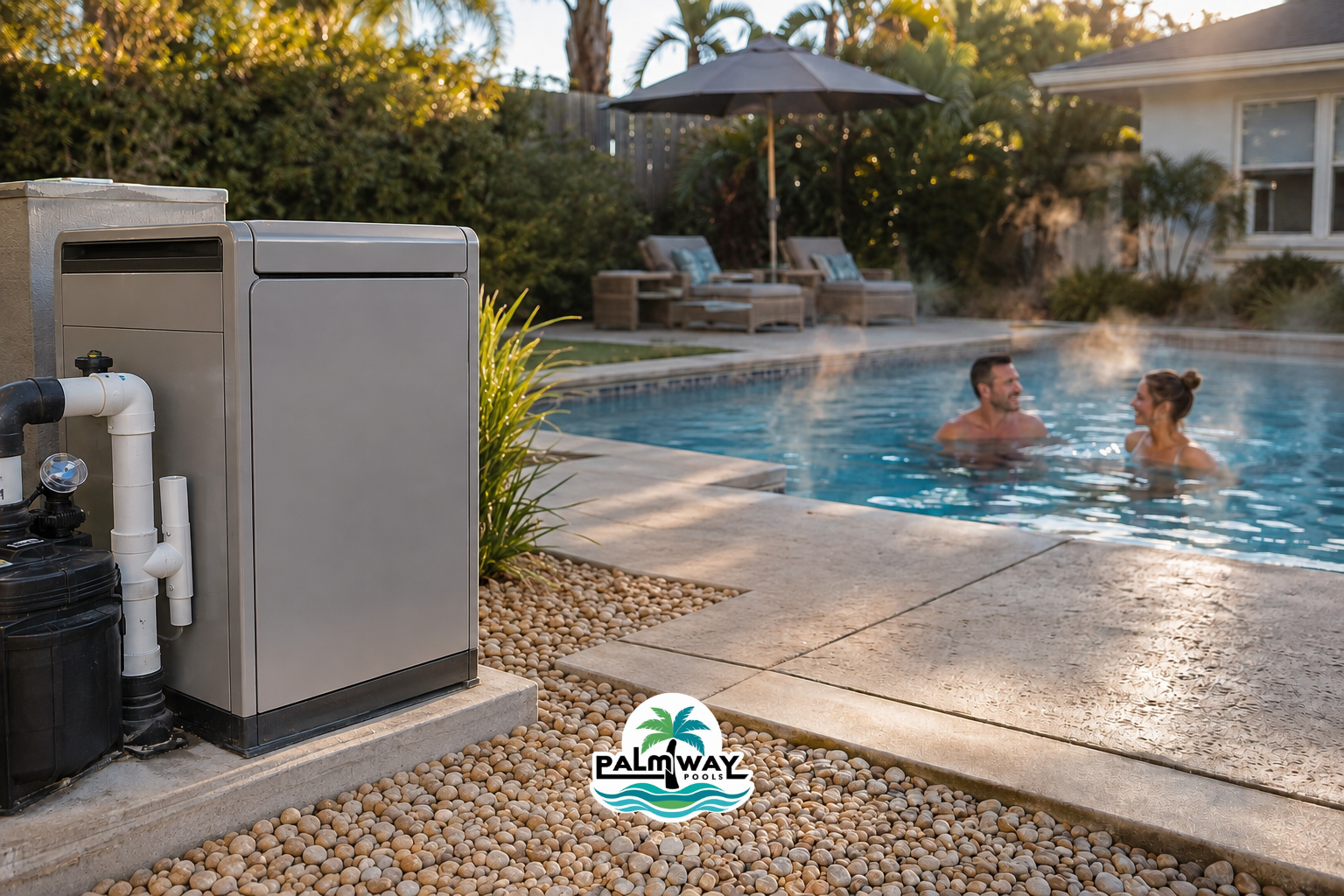
While heaters don’t cause green water directly, storm conditions can highlight other equipment weaknesses. Poor circulation can drop heating efficiency and make water less comfortable. Issues with valves, timers, or controls can delay recovery after rain.
When equipment problems pile up, a broader system check may be needed. Sometimes, pool equipment repairs and upgrades are necessary to fix recurring issues that cleaning alone can’t solve. Consider pool heater repair or a future replacement if your unit is aging or inefficient.
How to Keep Your Pool Clear After a Storm
Maintain a Strong Sanitizer Reserve
The best defense against storm-related algae is having a solid sanitizer level before the storm. If your pool's chemical balance is weak before a storm, heavy rain can cause problems. Keeping sanitizer levels right before bad weather makes it more likely your pool will stay clear afterward.
This is why preventive maintenance beats emergency cleanup. With a regular service schedule, your technician can adjust chemicals in advance, reducing the chance of green water surprises. Check our preventive pool care guide for tips on protecting your pool from big problems later.
Improve Drainage Around Your Pool
If water pools around your deck or flows into the pool during storms, your landscape might contribute to the problem. Poor drainage can send dirt, mulch, and debris into the pool, complicating storm recovery every time it rains. Proper drainage and deck upkeep can cut down on contamination.
Trim plants, clean gutters, and remove loose debris from your yard before storm season. These steps won’t eliminate the risk, but they reduce the debris your pool has to handle after rain. Less debris means less algae fuel and quicker recovery.
Use Professional Maintenance Before and After Storm Season
Regular professional service can catch imbalances before they become visible problems. This includes brushing, vacuuming, testing water, inspecting circulation, and checking equipment for early signs of failure. When these tasks are consistent, your pool is more likely to stay clear even when the weather shifts quickly.
If you prefer a hands-off approach, regular pool cleaning and maintenance visits can simplify storm recovery. Many pool owners find scheduled service more cost-effective than repeated emergency treatments, especially when green water keeps returning.
When Green Water Signals a Bigger Problem
Green Water After Every Storm
If your pool turns green every time it rains, it’s likely not just the weather. Repeated algae growth often hints at underlying issues like poor circulation, inadequate equipment, bad filtration, or inconsistent chemical management. The storm might just be exposing an existing weakness.
Recurring issues deserve a closer look. A pool that turns green after every storm might need a stronger maintenance schedule, better filtration, or equipment repair. If you notice cloudy water follows rain more frequently than it should, compare with our cloudy water troubleshooting guide, as root causes can overlap.
Surface Staining or Slime on Walls and Steps
Green water often comes with slippery surfaces or stains on pool walls, steps, and floors. These signs suggest algae have attached to the pool interior, not just floating in the water. Once algae stick to surfaces, it’s tougher to eliminate without brushing and targeted treatment.
In severe cases, a drain and acid wash might be needed to reset the pool surface and remove buildup. If stains keep coming back, a pool drain and acid wash can be an effective restoration option. It’s especially useful if a pool has been neglected through multiple storm cycles or has stubborn discoloration.
Equipment Failure or Persistent Water Loss
Sometimes the real issue isn’t algae but a leak, failing pump, or broken circulation part that rain highlights. If the water level keeps dropping, the pump loses prime, or the system sounds strained after storms, repair might be needed instead of just more chlorine. In that case, chemical treatment won’t fix the root cause.
A professional inspection can determine if the system needs repair or replacement. If the pump is unreliable, pump repair might restore proper flow, while older units might need a pump replacement. Fixing the mechanical issue first gives your chemical treatments a better chance of success.
Getting Professional Help: What to Expect
Complete Water Testing and Diagnosis
A proper service visit should start with a full water analysis, not just a quick chlorine check. This means testing pH, alkalinity, sanitizer, stabilizer, and sometimes calcium hardness or phosphate levels. The technician should also check for cloudiness, debris load, and visible algae growth.
This diagnostic step is vital because green water can have multiple causes. A professional can tell whether it’s a chemistry problem, a filtration issue, or both. This saves time, cuts down on guesswork, and helps prevent repeat treatment failures.
Equipment Inspection and Cleaning
Technicians should also inspect the pump, filter, skimmer, baskets, and return lines. After heavy rain, a small clog or equipment fault can make recovery harder than it should be. Thorough cleaning helps restore circulation and supports the chemical treatment process.
For homeowners seeking reliable ongoing support, a full pool service plan offers a more comprehensive recovery strategy than one-time chemical corrections. This approach is particularly helpful in coastal areas where the weather can change frequently and suddenly.
Custom Prevention Plan for Your Property
The best long-term solution isn’t just fixing the current green-water issue; it’s creating a plan that prevents the next one. A custom prevention plan may include more frequent service during storm season, updated equipment, improved filtration, or extra cleaning after major rainfall. The right plan depends on pool size, usage, surrounding landscaping, and equipment condition.
For property owners who want reliable support in Treasure Island, professional maintenance from Palmway Pools can keep recovery quick and predictable. In many cases, a combination of regular care and targeted equipment support is the easiest way to keep your pool ready for use all year long.
Frequently Asked Questions About Green Pools After Rain
How fast can a pool turn green after heavy rain?
If sanitizer levels are already low, a pool can start changing color within 24 hours. In warm weather, algae can spread quickly once chlorine drops below protective levels. The sooner you skim, test, and rebalance the water, the easier it is to stop the problem early.
Can I swim in a pool that turned green after rain?
No, it’s not safe to swim in green water. A green pool often means poor sanitation and possible contamination. The water may contain bacteria or other irritants. Wait until the pool is clear, balanced, and tested before anyone swims.
Will shocking the pool always fix green water?
Not always. Shock helps kill algae, but it won’t fix clogged filters, weak circulation, or heavy debris buildup. If the water remains green after shocking, you likely have a deeper issue needing diagnosis and possibly equipment repair or replacement.
Should I clean the pool before or after testing?
Do both as soon as possible, but start by removing visible debris so test results are more accurate. Heavy debris can distort chemistry and make treatment less effective. Once the pool is skimmed and baskets are cleared, test the water and treat it based on the results.
Keep Your Pool Clear, Even After the Rain
When a pool turns green after heavy rain, it's usually due to diluted sanitizer, added debris, poor circulation, and sometimes failing equipment. The quickest way to fix the issue is to remove debris, test the water, restore chemistry, and inspect the pump and filter. If the problem keeps coming back, a more complete maintenance strategy is probably needed rather than another quick chemical treatment.
That’s where consistent professional care comes in. Whether your pool needs a routine cleaning visit, a filtration upgrade, or a full system inspection, the right support can save time and reduce stress during storm season. If you want dependable help with green-water recovery and prevention, reach out to Palmway Pools for expert service, or explore our pool cleaning, pool service, and equipment repair and upgrade options today.
For more information or to schedule service, visit Palmway Pools or call (844) 307-1680. Keeping your pool clear after the next storm starts with the right plan today.
For additional guidance on water safety and treatment best practices, the U.S. Environmental Protection Agency offers useful water-quality resources, and the Association of Pool & Spa Professionals provides industry information relevant to pool care and equipment standards.