When your pool's water chemistry isn't quite right, you'll notice the effects quickly: cloudy water, irritated skin, and even some damaged equipment. In warm places like Treasure Island, these issues can come up even faster. That’s why regular care from professional pool cleaning and pool service is so important.
Keeping your pool water balanced isn’t just about looking good. It’s crucial for swimmer safety, the effectiveness of sanitizers, and the longevity of your pool equipment. According to the CDC Healthy Swimming program, balanced water is key to preventing illnesses and ensuring a safe swimming environment. So, every chemical choice you make has a big impact.
This article will walk you through what happens when pool water chemistry gets out of whack, how to spot the signs, and what you can do to get things back to normal. You'll also learn why local weather conditions make regular maintenance essential and when it's time to call in the pros.
Why Pool Water Chemistry is Crucial
It Keeps Swimmers Comfortable and Safe
The chemistry of your pool directly affects how the water feels, smells, and works. If pH, chlorine, alkalinity, or calcium hardness levels are off, swimmers might experience burning eyes or dry skin. A well-balanced pool is not only more comfortable to swim in but also more sanitary.
It Protects Pool Surfaces and Equipment
Water that's too acidic can corrode metal fixtures and equipment. On the flip side, water that's too basic can leave mineral deposits on tiles and clog filters. Over time, these issues can become costly, so regular inspections and preventive care are worth it.
Clear Water Needs Good Chemistry and Circulation
Cloudy water isn't just a filter problem. It often comes down to poor chemical balance. If the sanitizer isn't working properly because of pH issues, debris stays in the water longer. For more on this, check out why pool water clouds up so quickly. Clear water results from everything working together.
Common Problems from Unbalanced Pool Water
Skin, Eye, and Breathing Irritation
One of the first signs that something's off with your pool water is swimmer discomfort. Low pH can make water harsh, while high pH can allow contaminants to linger. A chlorine smell doesn't mean too much chlorine; it often means the sanitizer isn't working effectively.
Cloudy Water and Weak Sanitizer
When pH is too high, chlorine is less effective. This is why maintaining balanced chemistry is so important. Pool water chemistry fundamentals explain how quickly effectiveness drops when conditions aren't right.
Scaling and Surface Damage
High calcium hardness or alkalinity can create scale on tiles and equipment. Low pH and alkalinity can damage surfaces. To fix buildup, a pool drain and acid wash might be necessary.
Understanding the Main Chemical Levels
pH: The Foundation of Pool Water Balance
pH measures how acidic or basic your water is. The ideal range is 7.2 to 7.6. Below this, water becomes corrosive; above it, sanitizer performance drops.
Total Alkalinity: The pH Stabilizer
Total alkalinity buffers pH and prevents big swings. Aim for 80 to 120 ppm. Too low, and pH can fluctuate; too high, and pH becomes hard to adjust.
Calcium Hardness: Protecting Pool Finishes
Calcium hardness affects whether water is too aggressive or too scale-forming. A common target is 150 to 300 ppm. Low calcium can damage plaster, while high calcium can cause cloudy water.
Sanitizer Levels and Combined Chlorine
Chlorine or another sanitizer needs to be strong enough to kill germs. But if pH is out of range or combined chlorine has built up, sanitizers won't work well. Consistent testing helps keep things in check.
What Happens When Levels Aren't Right
Low pH and Acidic Water Issues
When pH drops below 7.2, water becomes more acidic, which can damage metal components and irritate swimmers. Over time, acidic water can also wear down pool surfaces.
High pH and Weak Sanitation
High pH reduces chlorine’s effectiveness, making water look dull and encouraging scale. Often, the problem isn't lack of chlorine, but that it's not working well.
Low Alkalinity and Unstable Readings
Low alkalinity makes pH sensitive to changes, causing constant adjustments. Stable alkalinity makes pool care more predictable.
High Calcium Hardness and Scale Formation
Too much calcium can leave deposits on tiles and narrow water passages. If left unresolved, it can lead to cloudy water and mechanical strain, requiring pump repair or even replacement.
Why Treasure Island Pools Need Special Care
Heat Speeds Up Chemical Changes
Warm water speeds up chemical reactions and increases chlorine demand. Frequent sunshine and high temperatures mean regular monitoring is crucial.
Rain and Runoff Change Chemistry Fast
Rainwater is often slightly acidic and can quickly change pH and alkalinity. This is especially true in coastal Florida, where storms are common.
Local Maintenance Habits Matter
In communities with frequent pool use, chemistry changes happen faster. That’s why many homeowners opt for ongoing pool service. Professional checks catch issues before they become big problems.
How Often to Test and Adjust Pool Water
Weekly Testing is Key
Test at least once a week, more often during heavy use or storms. Weekly testing helps catch trends before they become problems.
After Rain, Parties, or Repairs
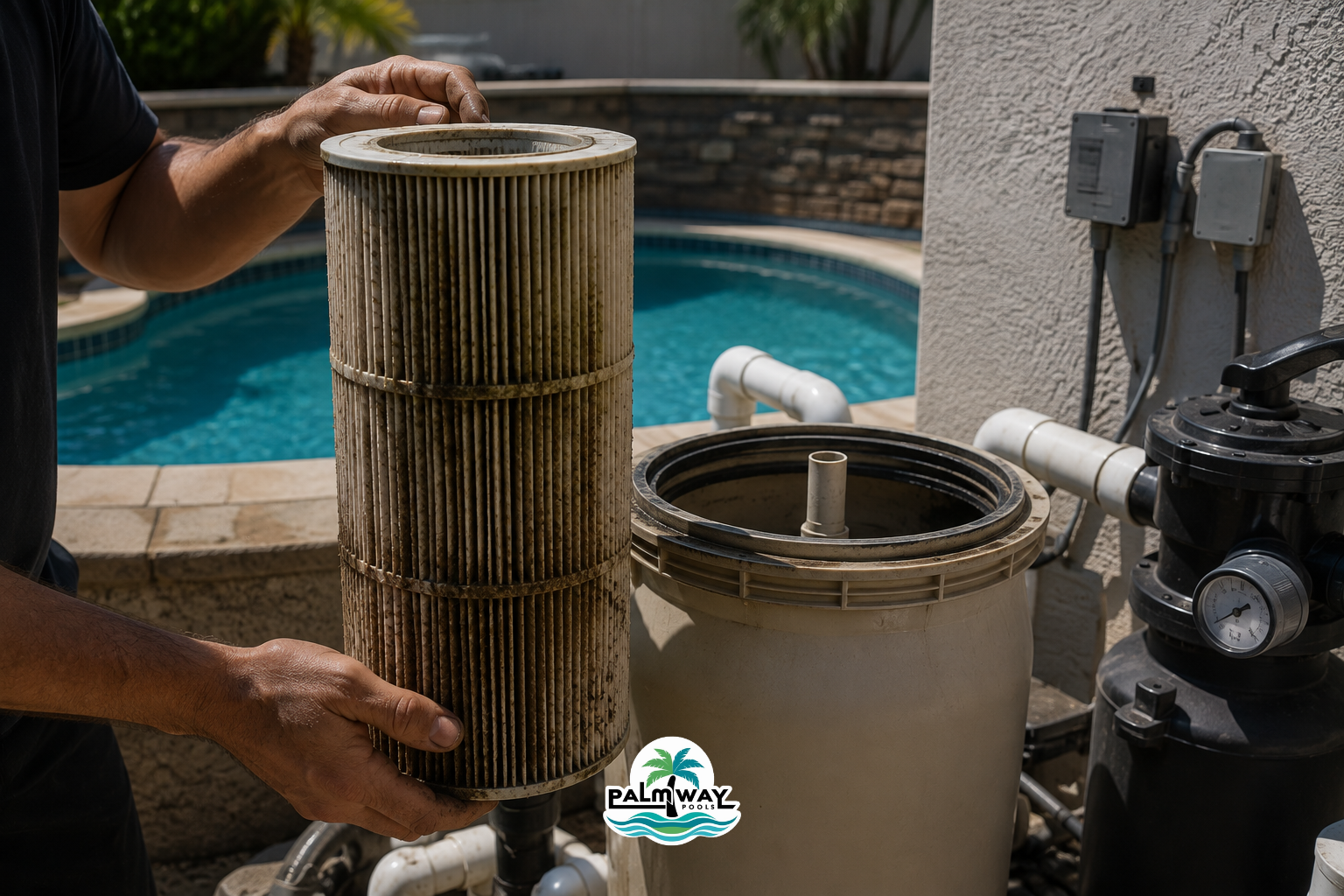
Check pool chemistry after major events that affect water quality. If a filter struggles, pool filter replacement might be needed.
When a Professional Can Help
Sometimes you need a pro to diagnose recurring imbalances. If you're having ongoing issues with cloudy water or scaling, a professional can save you time and money.
Troubleshooting Common Imbalances
Cloudy Water that Keeps Coming Back
If the water stays cloudy after treatment, it could be a circulation, filtration, or chemistry issue. Often, more than one problem is at play.
Green Water or Early Algae Growth
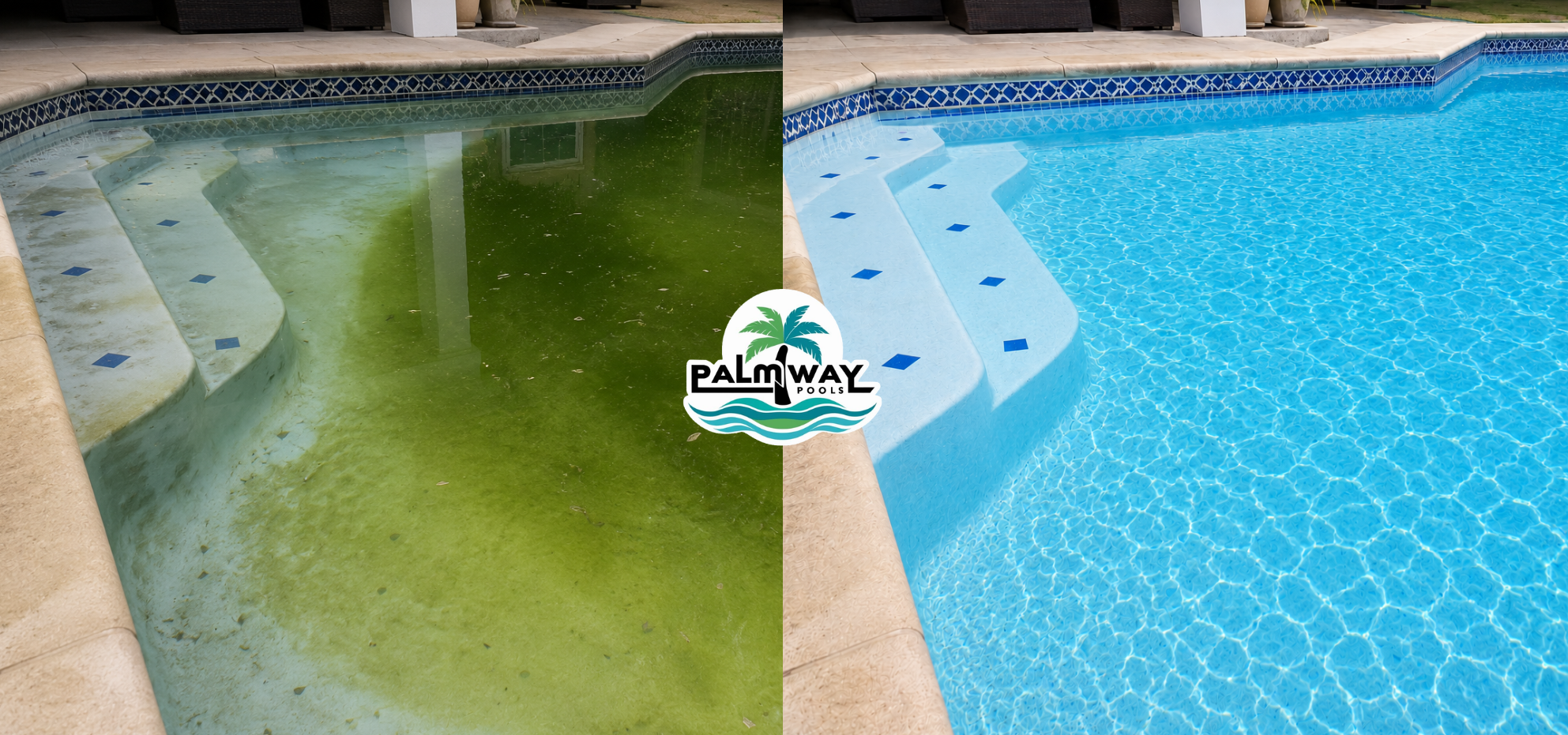
Algae growth often means low sanitizer performance or inconsistent maintenance. Quick response is key because algae gets harder to remove once it spreads.
Scale on Tiles, Heaters, or Fixtures
Scale usually means high pH or high calcium hardness. If buildup is light, adjust chemicals. If it's thick, surface treatment may be needed.
Strong Chlorine Smell but Poor Sanitation
A strong chlorine smell often means combined chlorine, not excess free chlorine. Proper testing is crucial to understanding your pool's health.
Best Practices for Balanced Chemistry
Consistent Testing Routine
Test on the same day each week, and keep a log of readings. This helps you spot changes before they become serious.
Maintain Circulation and Filtration
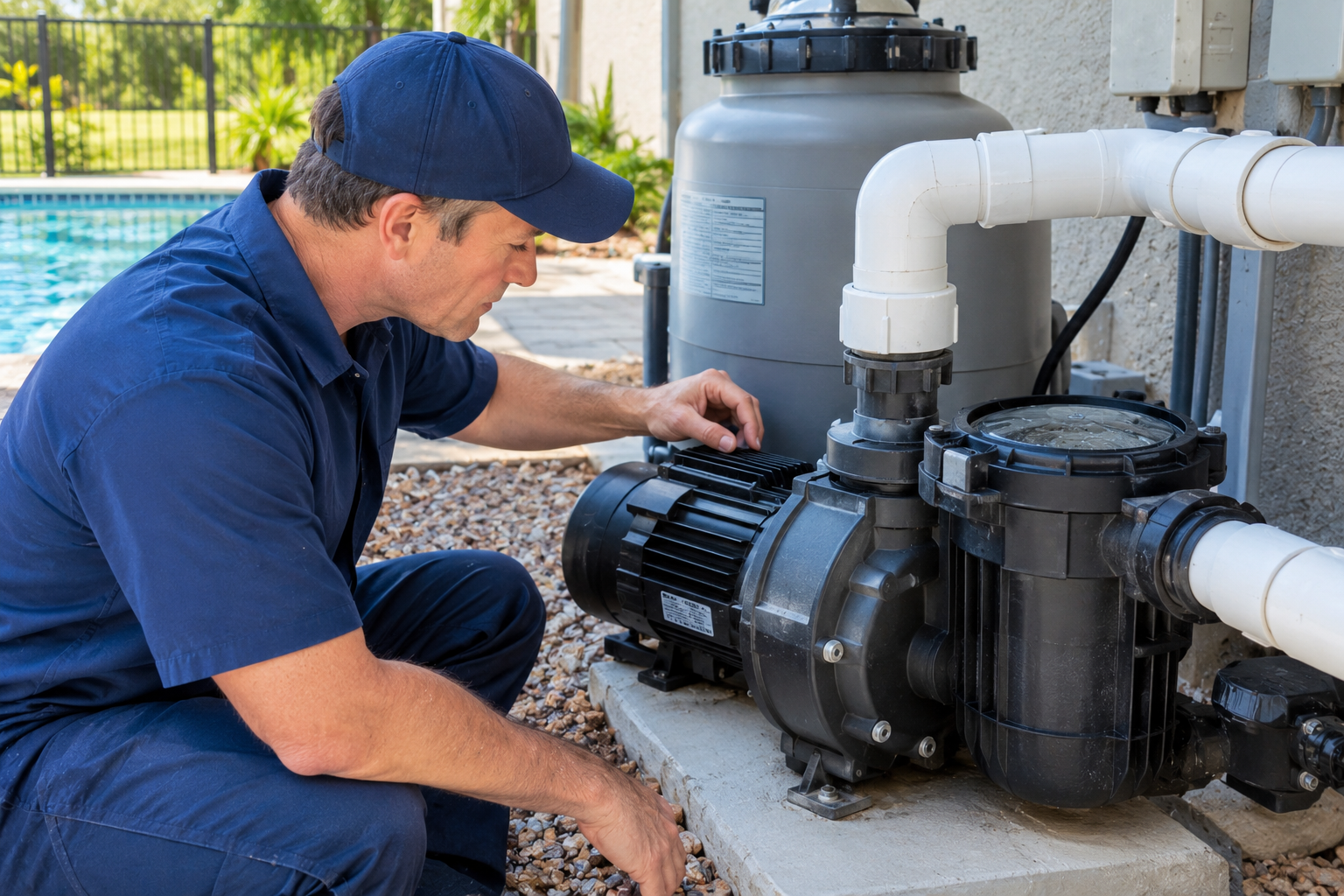
Chemistry works best when water flows well, and debris is removed efficiently. If the pump is having issues, pump repair might help.
Address Equipment Problems Early
Unbalanced water can damage equipment, and equipment issues can cause imbalance. Consider evaluating pool equipment repairs/upgrades for long-term savings.
Don’t Ignore Seasonal Changes
Seasonal changes like heat, rain, and wind affect chemical consumption. The EPA's water quality resources emphasize the need for ongoing monitoring.
When to Call the Pros
Recurring Balance Problems
If you're always adding chemicals but still having issues, there might be a deeper problem. A technician can identify patterns you might miss.
Visible Damage or Persistent Cloudiness
Stains, scaling, or ongoing cloudiness mean something's wrong. Basic chemical tweaks might not be enough. A drain and acid wash service can help restore your pool.
Peace of Mind for Busy Homeowners
If weekly testing and balancing feel overwhelming, hiring a maintenance team can keep your pool ready for use and reduce the risk of costly repairs.
FAQs About Pool Water Chemistry
What Should I Check First if My Pool Looks Off?
Start with pH, sanitizer level, and alkalinity. If those are fine but problems continue, check circulation, filtration, and calcium hardness.
Why Does My pH Keep Dropping?
Common causes include acidic products, rainwater, or low alkalinity. Regular testing and maintenance logs can help solve this mystery.
Can I Fix Unbalanced Water Myself?
Yes, you can often make basic corrections if you understand your test results. But if problems persist, professional help can prevent further issues.
How Do I Prevent Future Problems?
Stick to a weekly testing schedule, keep filters clean, and monitor water after storms. For a long-term plan, consider ongoing pool service.
Wrapping Up: Balanced Water, Better Pool
When your pool water isn't balanced, it affects everything from swimmer comfort to equipment longevity. But with routine testing and care, most problems are preventable. In Treasure Island, where warm weather and frequent rain are the norm, proactive care is key. Whether you manage a backyard pool or a commercial one, keeping an eye on chemistry matters.
If you want cleaner water and less hassle, Palmway Pools - Pool Cleaning Services is here to help. Explore our pool cleaning and maintenance services to keep your pool in top shape. For help in Treasure Island, get in touch today and make balanced water an easy part of pool ownership.