Why Your Pool Water Doesn’t Stay Clear for Long
Keeping your pool water sparkling shouldn't be a one-day wonder. If you find that one day it looks great and the next it’s cloudy, there’s likely a bigger issue at play than just tweaking the chlorine levels. Often, it's a combination of water chemistry, circulation, filtration, and outside elements that keep messing things up. For homeowners who want their pool to look inviting all week long, regular pool cleaning and a steady pool service plan can make a world of difference.
Cloudy water isn’t just an eyesore; it can be a safety concern too. The U.S. Centers for Disease Control and Prevention notes that poor water quality can make it tough to keep the water properly disinfected and might hide dangers beneath the surface. Check out the CDC Healthy Swimming program for more info. In this guide, we'll explore why your pool water loses clarity quickly, how to figure out what's going wrong, and what maintenance steps can help keep it clear longer.
What Cloudy Pool Water Is Really Telling You
Clarity problems are usually a symptom, not the root cause.
When your pool water gets cloudy soon after cleaning, it's usually a red flag. The main culprits are often chemical imbalances, poor filtration, weak circulation, and tiny debris sneaking through the system. Sometimes it’s obvious, like an algae bloom or a filthy filter, but other times the real issue might be hidden in the chemistry or how well your equipment is working. That’s why a quick fix won’t last if you don’t address the underlying issue.
According to industry insights, many residential clarity issues stem from alkalinity instability or high dissolved solids, not just a lack of sanitizer. This means your pool might appear fine at first glance but still struggle with a persistent haze. You’ll want to keep an eye on pH, total alkalinity, calcium hardness, and stabilizer levels.
Clarity problems develop faster in warm, busy climates.
In areas with heat, humidity, and frequent rain, pools can go from clear to cloudy in no time. Warm water encourages algae growth, and rain can dilute your sanitizer and introduce organic contaminants. Heavy use of the pool adds sunscreen, body oils, sweat, and other gunk that can overwhelm your filter system. In coastal Florida, these factors often mix with windblown debris and salty air, making regular maintenance super important.
If you live in Treasure Island, a maintenance schedule tailored to local conditions can help reduce recurring cloudiness and equipment wear. A reliable Treasure Island pool maintenance plan can keep you ahead of weather-related issues.
The Most Common Reasons Pool Water Keeps Going Cloudy
1. Imbalanced water chemistry
Good chemistry is the foundation of clear water. If the pH is too high, chlorine doesn’t work as well. If alkalinity swings wildly, the water becomes unstable, making it tough to maintain sanitation. Low calcium hardness can make the water corrosive, while too-high levels can lead to scaling and cloudiness. Even if your sanitizer level seems fine, an imbalance in these other areas can keep the water from clearing up.
Regular testing is key. Instead of waiting for the water to look off, test it on a schedule. Automated monitoring tools are gaining popularity because they offer faster feedback and help prevent problems from building up over days.
2. Weak filtration or a dirty filter
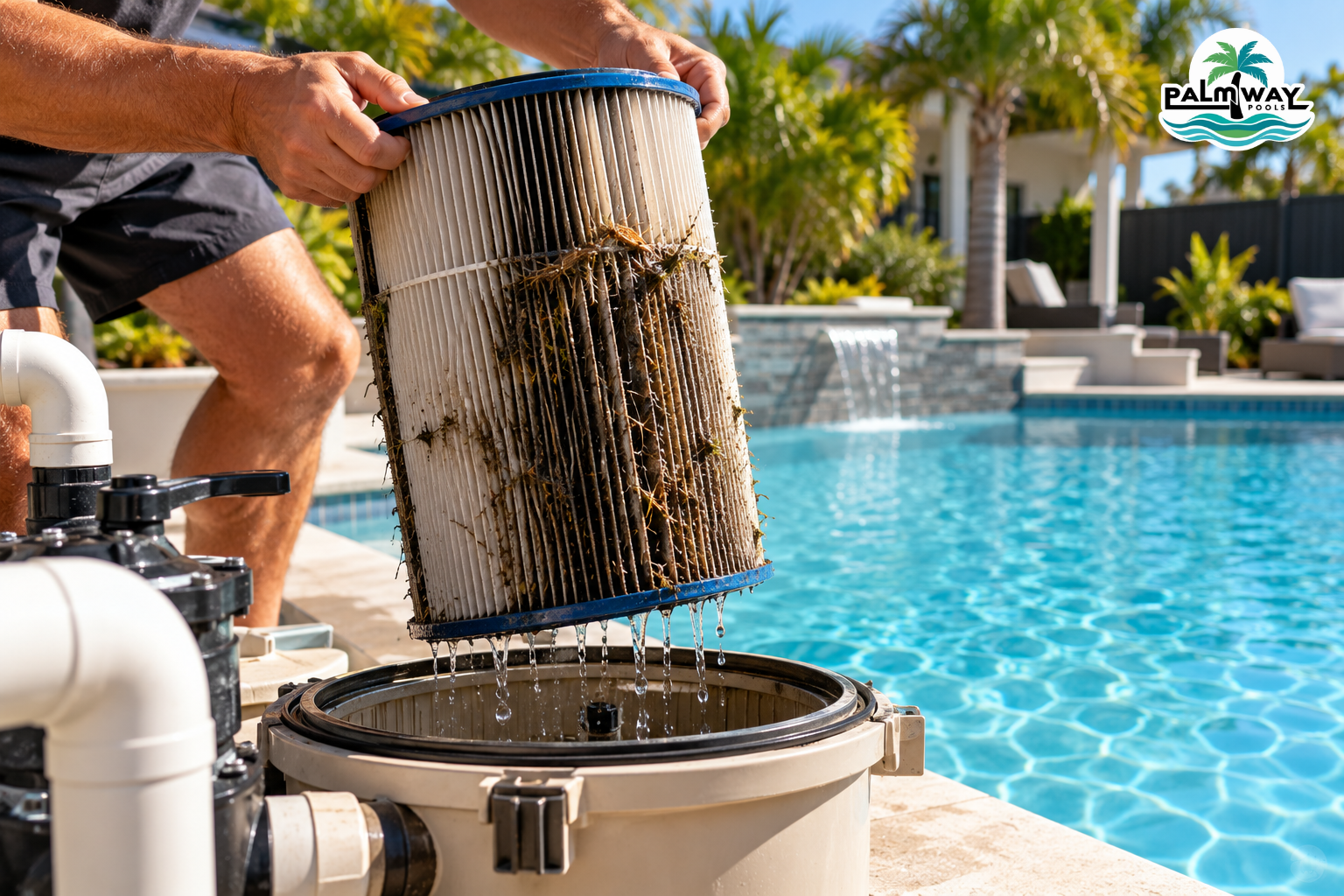
A filter that’s clogged, too small, worn out, or poorly maintained won’t trap small particles effectively. This is a common reason why water stays hazy even after you’ve balanced the chemicals. Sand filters might need backwashing, cartridge filters need cleaning, and DE filters need regular checks to ensure the media is working well. If your filter is damaged or old, the water might never fully clear.
If filtration is the issue, adding chemicals won’t solve it. Often, the best fix is a professional inspection, and if needed, a pool filter replacement to restore proper flow and particle capture. If you notice weak return pressure or poor circulation, you might need to check if your pump is working right.
3. Poor circulation and pump problems
When water doesn’t move well, it gets stagnant, and stagnant water is hard to keep clear. Dead zones allow debris and particles to settle instead of being filtered out. Pumps that are undersized, clogged, or aging can all reduce circulation. Sometimes the pump runs but doesn’t move enough water for the size of the pool.
Experts recommend running your pump long enough for the entire pool volume to circulate, especially during heavy use or hot weather. A good rule of thumb is about eight hours a day in peak season, but this varies by pool size and usage. If your pump is noisy, leaking, or delivering weak flow, it might be time for pump repair or even pump replacement if the unit is outdated.
4. Algae and organic contamination
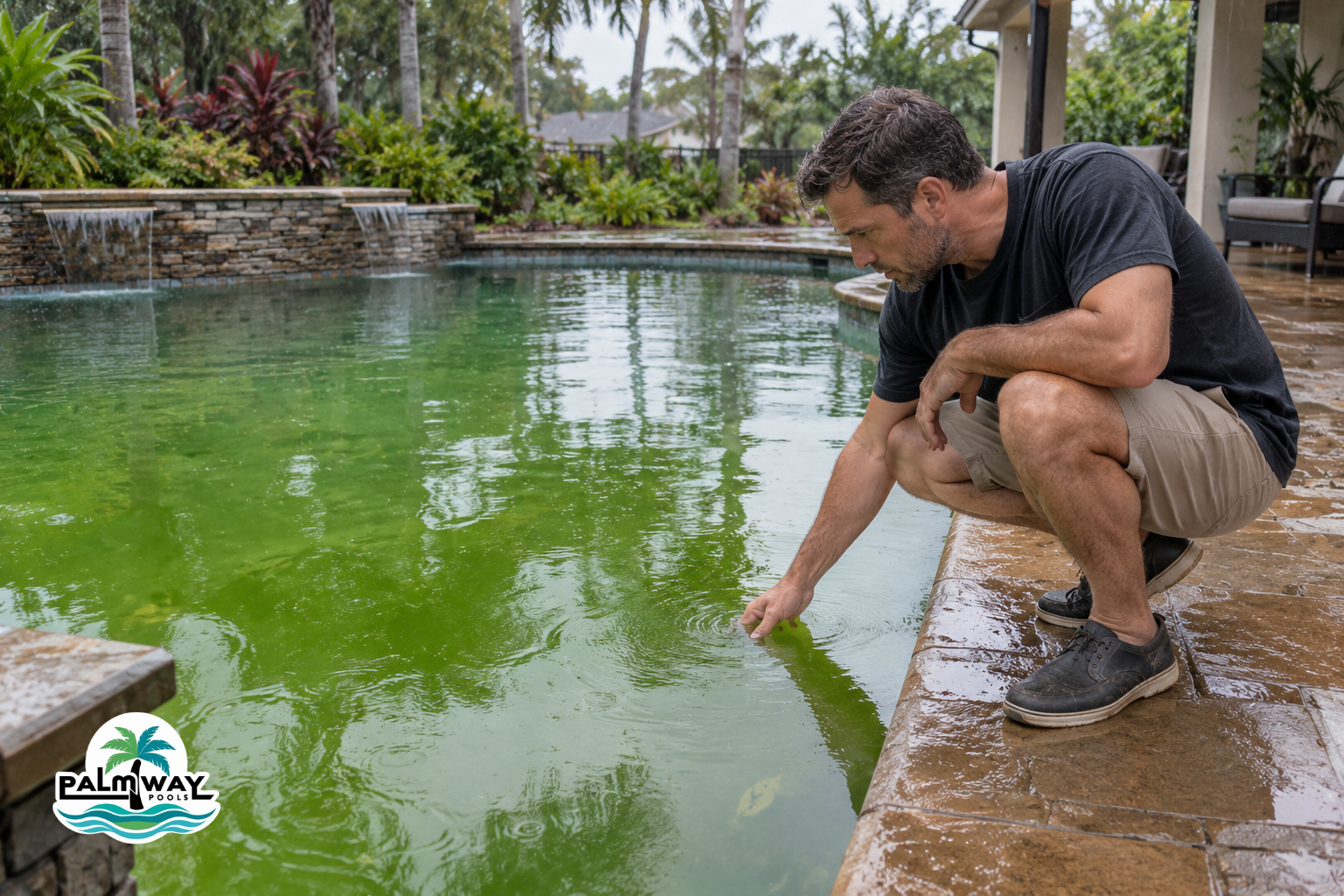
Even a bit of algae can make pool water look dull, greenish, or cloudy before it fully blooms. Organic debris like leaves, dirt, pollen, and swimmers add to this by feeding microorganisms and increasing the sanitizer load. Regular brushing, vacuuming, and skimmer basket cleaning are crucial to prevent organic matter from becoming a bigger problem.
If your water turns cloudy after a storm or heavy use, think beyond just adding chlorine. Fine organic particles might need physical removal. For recurring issues, more intensive treatment might be necessary, like a pool drain and acid wash if there’s staining, scale, or severe buildup.
How Smart Pool Technology and Eco-Friendly Trends Are Changing Maintenance
Automated water monitoring is becoming the new baseline.
One of the big trends in pool care is smarter monitoring. Automated systems track sanitizer, pH, and other key readings in real-time, helping owners catch issues before they become visible problems. These tools are especially handy for busy households or commercial pools that can't rely on occasional manual testing. They help keep your water chemistry stable and prevent surprise issues.
While smart monitoring doesn’t replace physical cleaning or filtration, it does reduce guesswork. It’s especially helpful for those who want more consistency without constantly adding chemicals. It’s also a great fit for a modern pool service plan because it provides technicians with precise data for smaller, timely adjustments.
Eco-friendly treatments are gaining momentum.
Pool owners are increasingly interested in reducing harsh chemical use while keeping the water clear. Options like saltwater systems, natural clarifiers, and efficient circulation schedules come up often. These can help reduce eye and skin irritation and may offer a more comfortable swimming experience, but they do still need regular oversight. "Eco-friendly" doesn’t mean "maintenance-free"; it just means the system may rely more on balance, filtration, and routine care.
For a deeper technical dive into balanced chemistry and pool sanitation principles, the Pool & Hot Tub Alliance offers industry education and standards info. The key takeaway is simple: modern tools can make things easier, but clear water still depends on a well-maintained system.
A Practical Troubleshooting Checklist for Cloudy Water
Start with water testing.
The first step is always water testing. Check pH, free chlorine, total alkalinity, calcium hardness, and stabilizer levels. If one reading is off, correct it before adding more chemicals. Overcorrecting can cause new issues, like scale or irritation. Consistency is more important than dramatic treatments.
If you’re unsure how to interpret the results, compare them with public guidance. The U.S. Environmental Protection Agency provides info on water quality and treatment concepts to help homeowners understand why balance matters. Regular testing also creates a baseline, making it easier to spot small changes before they become visible in the water.
Inspect the filter and circulation path.
After checking chemistry, inspect the gear that moves and cleans the water. Clean out skimmer baskets, pump baskets, and return areas. Check if filter pressure is higher than usual—it might mean clogging. Make sure the pump is primed and water is moving evenly. If one pool area collects more debris, the circulation pattern might need adjusting.
Many recurring clarity problems are fixed by restoring flow. In other cases, it’s a worn part or a filter that’s no longer effective. That’s where a professional check can save time and avoid unnecessary chemical spending.
Brush, vacuum, and remove organic load.
Fine debris and algae spores stick to surfaces, especially in areas with poor circulation. Brushing loosens buildup so the filter can capture it, and vacuuming removes settled material before it breaks down. This step is easy to underestimate but often makes a visible difference within a day or two when combined with good chemical balance and circulation.
Also, check nearby landscaping, roof runoff, and wind exposure. Sometimes, the pool isn’t failing on its own; it’s constantly getting contaminants from the surrounding area. If your pool is often exposed to debris or heavy use, more frequent maintenance might be the best solution.
Why Cloudiness Returns Even After You Shock the Pool
Shock is a tool, not a cure.
Many pool owners think shocking the water will clear up cloudiness immediately. It can help if the root cause is temporary, like a mild sanitizer drop. But if the water remains cloudy after shocking, the problem is still there. It might be poor filtration, unstable alkalinity, dissolved solids, or an ongoing contamination source.
Too much shock can also cause temporary haze. When chemicals are added aggressively, the pool may need time and circulation to recover. A measured approach is generally better than repeated "more is better" treatments. Stability almost always beats dramatic correction.
High dissolved solids can quietly undermine clarity.
One less obvious cause of ongoing cloudiness is high total dissolved solids, which can build up from repeated chemical additions, evaporation, and swimmer load. When dissolved solids get too high, water may resist balance and look dull even when sanitizer levels seem fine. This is why professionals look at the whole water profile rather than just focusing on chlorine.
In long-running pools, especially those that frequently receive chemicals or top-off water, a partial drain and refill may eventually be necessary. This kind of reset should be evaluated carefully, especially if there’s scale, staining, or chronic imbalance. The goal is not just to make the water look better for a day but to restore a more stable operating range.
Local Factors That Make Clear Water Harder to Maintain in Florida
Heat, rain, and humidity change the maintenance load
Florida weather creates the perfect environment for quick water quality swings. Warm temperatures support algae growth, and humidity increases the chance that organic debris stays active. Heavy rains dilute sanitizer and can change pH and alkalinity overnight. Maintenance that works in cooler climates might not cut it during peak season here.
For many pool owners, the solution is to shift from reactive cleaning to preventive care. A more frequent pool cleaning schedule, paired with regular inspections, can keep your system ahead of the weather instead of constantly catching up after storms or hot spells. This approach is especially helpful for properties near the coast, where wind and salt exposure add another layer to maintenance.
Busy pools need more than occasional attention.
Pools used by families, guests, renters, or commercial customers naturally collect more contaminants than lightly used backyard pools. Sunscreen, cosmetics, sweat, and body oils can overwhelm a weak filtration cycle quickly. In these cases, the chemistry might test fine in the morning and still look hazy by evening because the pool processes too much load for the current maintenance routine.
That’s why commercial-style oversight can be valuable even for residential owners with high usage. Regular inspections, filter care, and circulation checks help prevent the cycle of clear-water-then-cloudy-water that many owners face.
Real-World Example: When Better Equipment Solved the Problem
A filter mismatch can hide behind “good” chlorine levels.
Sometimes, a homeowner keeps chlorine and pH within range yet still battles recurring cloudiness. In a documented service case, the root cause wasn’t the chemistry but an undersized filtration system for the pool’s size and usage. Once the filter was upgraded and the circulation schedule adjusted, clarity improved dramatically and stayed stable longer. This shows why a single reading rarely tells the full story.
This is also why professional inspection matters. A pool might seem okay while running inefficiently behind the scenes. If your pool clears up but then clouds over again, it might be time to evaluate the system as a whole instead of just adding more chemicals.
Maintenance is often cheaper than repeated corrections.
Many pool owners spend more trying to fix recurring cloudiness than they would on preventive care. Repeated shock treatments, extra clarifier, unnecessary algae treatment, and emergency visits add up quickly. By contrast, routine service can catch issues early, extend equipment life, and cut down on major breakdowns. That’s why consistent maintenance plans are often the smarter financial choice over time.
If you need a broader system check, pool equipment repairs and upgrades can be a practical next step when old pumps, filters, or controls aren’t keeping up with the pool’s demands. Better equipment doesn’t eliminate maintenance, but it makes it a lot more effective.
How to Keep Pool Water Clear for Longer
Build a routine instead of reacting to problems.
The best way to keep water clear is to establish a maintenance rhythm that stays ahead of problems. Test the water regularly, clean the filter on schedule, empty baskets, brush surfaces, and ensure strong circulation. When these tasks happen consistently, small issues don’t have time to become cloudiness. This applies to residential pools, rental properties, and business facilities alike.
A good routine also makes it easier to spot changes. If your chlorine demand suddenly rises or your filter pressure increases faster than normal, that’s useful diagnostic information. A proactive system is much easier to manage than one that only gets attention after the water turns murky.
Know when to call a professional
There’s a point where DIY care becomes inefficient. If cloudiness keeps returning after testing, cleaning, and adjusting chemistry, the problem likely involves equipment or a deeper balance issue. Professional technicians can evaluate circulation, filter function, pump performance, and water chemistry together, which usually leads to faster and more lasting results. That approach is especially useful when multiple issues are interacting.
For owners who want dependable support, a complete service plan can bring peace of mind and better water consistency. A trained team can also identify whether the best solution is maintenance, equipment repair, or a more intensive reset service. If you're ready to stop chasing the same cloudy-water problem, professional help is often the fastest path forward.
Frequently Asked Questions About Pool Water That Won’t Stay Clear
Why is my pool cloudy even though the chlorine is normal?
Chlorine is only one part of the picture. Cloudiness can come from pH imbalance, high alkalinity, poor filtration, weak circulation, algae, or dissolved solids. If chlorine is normal but the water is still dull, the issue may be in one of the supporting balance factors or equipment components.
How often should I test my pool water?
During active swimming season, testing several times a week is often wise, especially after rain, heavy use, or chemical treatment. Automated monitoring can reduce guesswork, but manual tests are still valuable for confirming trends. The more often you test, the faster you can prevent cloudiness from building.
Is cloudy pool water safe to swim in?
Usually not. Cloudy water can hide hazards and may indicate that sanitation is not working properly. Even if the water looks only slightly hazy, it is best to avoid swimming until the cause is identified and corrected. Safety should always come before convenience.
What is the fastest way to clear a cloudy pool?
There is no universal shortcut, but the fastest path is usually a combination of water testing, filtration cleaning, circulation improvement, and removal of organic debris. If the filter is failing or the pump is weak, those issues must be addressed, or the cloudiness is likely to return. A professional assessment can speed up the process by identifying the actual cause right away.
Clear Water Starts With the Right Maintenance Plan
Pool water that will not stay clear is rarely suffering from just one problem. More often, it is a combination of chemistry, filtration, circulation, debris load, and weather pressure. The good news is that once you identify the pattern, you can usually stop the cycle and restore consistent clarity. With the right routine, the water stays safer, the equipment works better, and maintenance becomes far less frustrating.
If you are tired of dealing with cloudy water that keeps coming back, Palmway Pools can help with a maintenance approach built around your pool’s actual needs. From routine pool cleaning to equipment repair and ongoing care, our team helps homeowners and property managers keep water clean, balanced, and ready to enjoy. Visit Palmway Pools to schedule service and take the next step toward clearer water that lasts.
For more pool care guidance, you may also find our related articles helpful: how to spot an inefficient pool system, how to tell if your pool pump needs attention, and the complete guide to pool filter maintenance. Together, these resources can help you build a stronger, more reliable maintenance plan.