What Your Pool Water Can Tell You About Your Pool's Health
Your pool water does more than just provide a place to swim; it's a daily update on the health of your pool. When everything is balanced, the water looks clear, feels nice on your skin, and even helps protect your pool equipment. But when things are off, the water is often the first to show signs, which is why regular testing is so important for pool owners.
If you're a homeowner or manage a property, pairing regular testing with professional pool cleaning or ongoing pool service can help catch issues before they turn into costly repairs. This is especially true in coastal areas where factors like humidity and salt exposure can quickly change the water chemistry. Understanding what your pool water is telling you means you can react faster and keep your pool in tip-top shape all year.
Today's testing tools make it easier to get accurate information without any guesswork. Tools like digital photometric testers can reduce human error and give more consistent readings than basic strips. This matters because even small changes in chlorine, pH, or alkalinity can affect everything from how comfortable swimming feels to how long your filter and pump last. The CDC Healthy Swimming resources emphasize why keeping water balance is essential for safe swimming.
Why Pool Water Chemistry is Key
Water Chemistry Shows How Well Your Pool is Working
A healthy pool doesn't happen by accident. It needs a system where everything works together: sanitizer, circulation, filtration, and water balance. If one part is off, the water often changes in ways that are easy to spot if you know what to look for. Cloudiness, scale, odor, or skin irritation aren't just cosmetic; they often signal deeper problems.
Balanced water helps sanitizer work properly, prevents metals and minerals from acting unpredictably, and protects surfaces from damage. The U.S. Environmental Protection Agency explains the importance of proper water quality and safe chemical handling, especially when disinfectants are involved.
Testing Gives Early Warnings
When you check your pool water two to three times a week during swimming season, you can often catch issues before they turn into visible problems. A slight drop in chlorine might mean heavy use, a pH shift could suggest contamination, and rising calcium hardness might predict scaling. Catch these changes early to avoid cloudy water, surface staining, or worn-out equipment.
This is where preventive maintenance really pays off. If readings show weak circulation or fast debris build-up, it might be time to inspect the system or consider pump repair or filter replacement. Testing isn't just about chemistry; it's often the first clue to a developing mechanical issue.
Key Pool Water Parameters to Watch
Free Chlorine and Sanitizer Levels
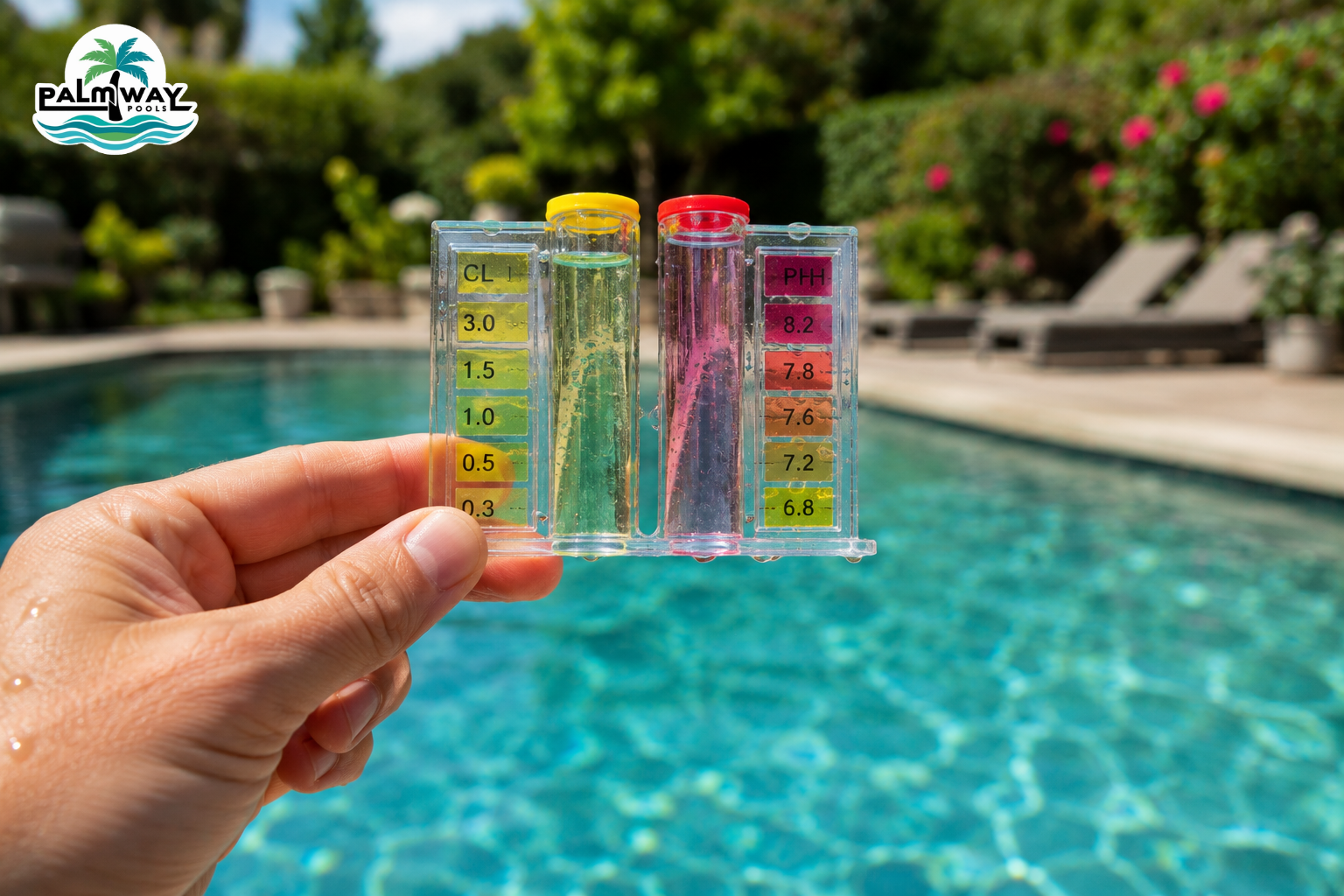
Free chlorine is crucial because it indicates how much active sanitizer is available to keep the water clean. The typical recommendation is a range of 1.0 to 3.0 ppm, depending on pool type, usage, and sunlight exposure. Too low, and bacteria and algae can quickly take hold; too high, and swimmers might notice odors, eye irritation, or dry skin.
It's a common myth that a strong chlorine smell means the pool is well sanitized. In reality, that smell often comes from chloramines, which form when chlorine is used up fighting contaminants. It's a sign the water needs attention, not reassurance. If sanitizer demand keeps rising, the pool might need more than just chemicals; it might need better circulation or cleaning.
pH and Total Alkalinity
pH tells you how acidic or basic the water is, with the ideal range being 7.2 to 7.6. Water outside that range can cause real problems. Low pH can corrode metal fixtures and damage finishes, while high pH can reduce sanitizer effectiveness and lead to cloudy water and scale.
Total alkalinity acts as a buffer that keeps pH stable. If it's too low, pH may swing rapidly. If too high, the water can become hard to adjust and more prone to clouding. For more details on balancing chemistry, check out our pool water chemistry guide.
Calcium Hardness and Cyanuric Acid
Calcium hardness measures the amount of dissolved calcium in the water. Keeping it between 200 and 400 ppm helps prevent scaling on surfaces and equipment. Too little calcium makes water aggressive and corrosive, while too much leaves deposits that clog components. Balanced calcium levels help extend the life of your pool surfaces and equipment.
Cyanuric acid, or stabilizer, protects chlorine from breaking down in sunlight. Without enough, chlorine disappears too quickly; with too much, sanitizer becomes less effective. This parameter greatly affects long-term water quality and should be regularly monitored.
What Common Water Problems Mean
Cloudy Water Signals Multiple Issues
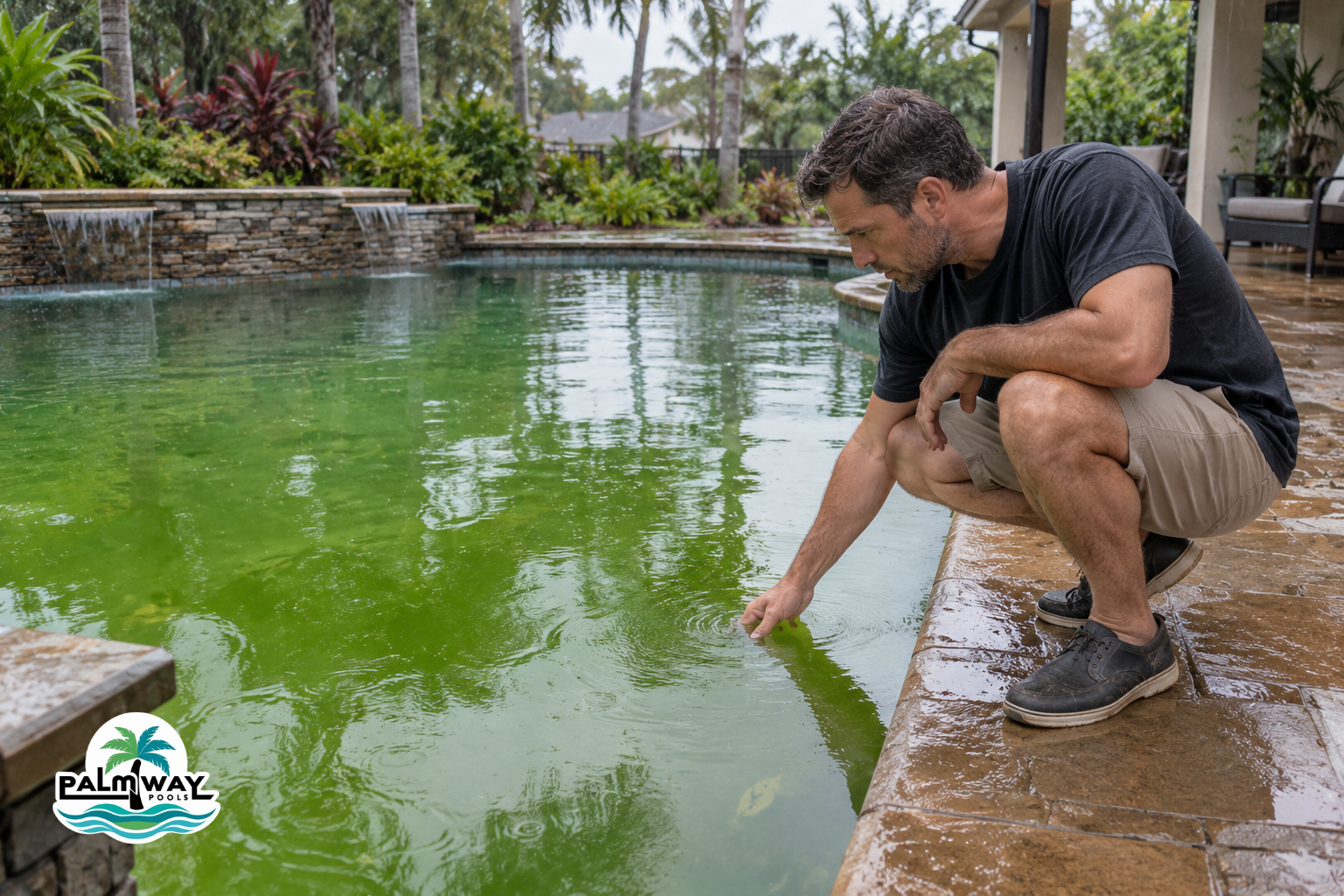
Cloudy water is a common issue and usually points to a mix of chemical imbalance, poor filtration, or contamination. It might show that sanitizer levels are too low, the filter is overloaded, or that circulation isn't effective. Sometimes, it's the first sign that algae or organic debris is building up.
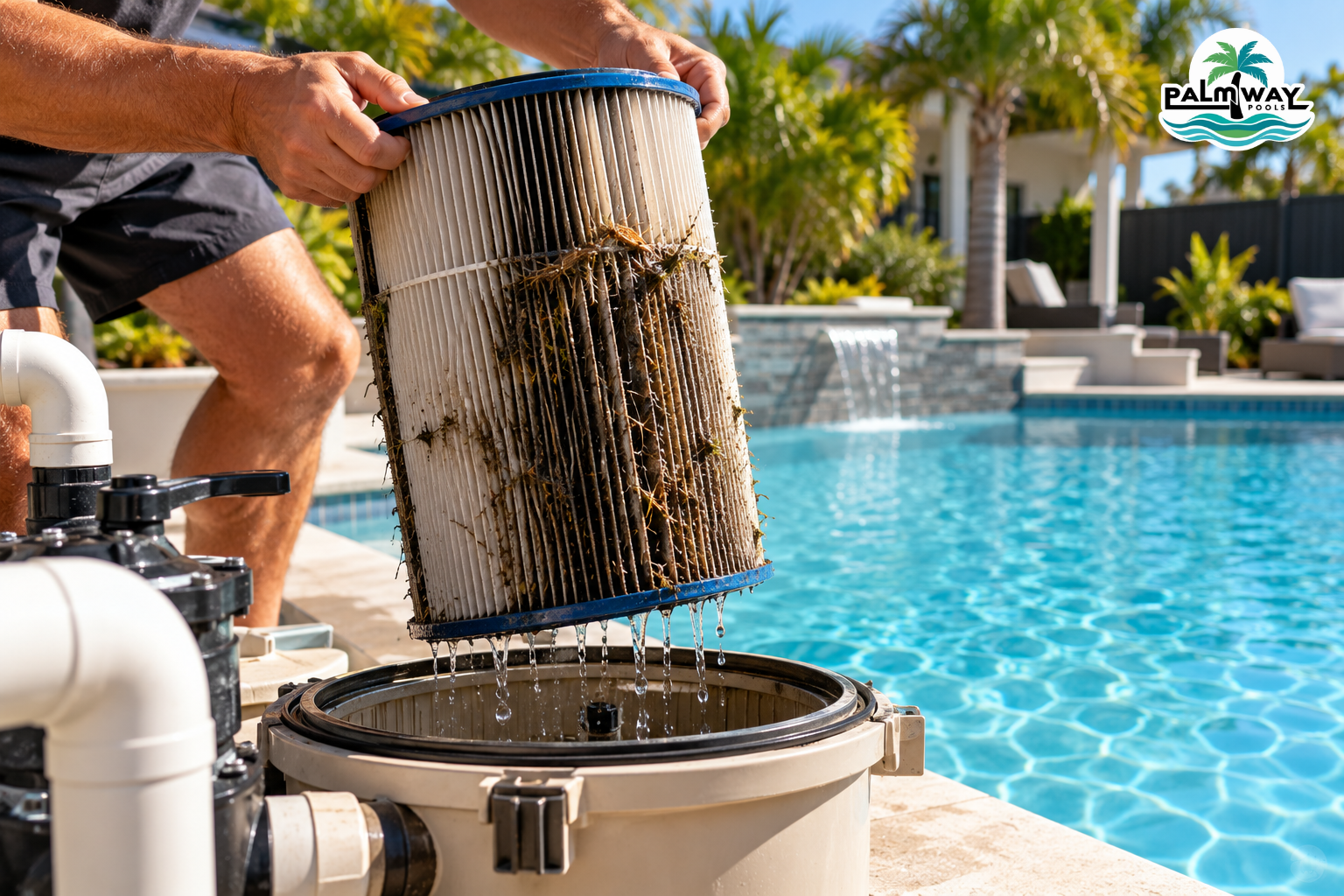
The quickest response is to test the water, then check the filter, pump flow, and skimmer baskets. If the filter is dirty or worn, professional maintenance might be needed. Our cloudy water guide explains why clarity problems often come back if the root cause isn't fixed.
Strong Odors, Irritation, or Slippery Surfaces
If swimmers complain about itchy skin, burning eyes, or a strong chemical smell, the pool might have a sanitation problem, not too much chlorine. These symptoms often appear when chloramines build up or when pH is out of range. Slippery walls or steps suggest biological growth, meaning sanitizer isn't keeping up with demand.
These aren't problems to ignore, as they can quickly escalate. If the water is often off balance, the pool might benefit from professional pool cleaning combined with targeted chemical correction. A regular service schedule helps restore conditions and keeps the pool comfortable for daily use.
Scaling, Stains, and Corrosion Indicate Mineral Issues
White crusty buildup on tiles or around fittings often means calcium levels, pH, or total alkalinity are too high. Rust-colored or dark stains might indicate metals in the water or equipment corrosion. Corrosion can also begin inside pumps, heaters, and plumbing lines before it shows on the surface.
If mineral issues keep cropping up, a deeper inspection might be needed. Sometimes, a pool may require attention like equipment repairs and upgrades or even a drain and acid wash when buildup is severe. Water chemistry often guides the next steps.
Testing Pool Water: Frequency and Consistency
A Realistic Testing Schedule
Experts suggest testing pool water at least two to three times a week during swimming season, and more often with heavy use, storms, or signs of imbalance. Pools in warm or coastal areas need extra attention since heat, rain, and airborne contaminants can change chemistry quickly. The aim is to stay ahead of problems, not just react to them.
For many, the easiest way to stay consistent is to make testing a weekly habit. This might mean testing on the same days, logging results, and watching for trends. For more on maintenance habits that support water quality, see our article on regular pool maintenance.
Digital Testers vs. Traditional Strips
Test strips are popular because they're simple and cheap, but they can be affected by storage, technique, and interpretation. Digital photometric testers are more precise and often easier to read, especially for those who want reliable results. This move toward smarter testing tools is one of the most practical developments in pool care because it reduces uncertainty and helps users act faster.
That said, tools are only as useful as the habits behind them. A digital tester can tell you the numbers, but you still need to understand what the readings mean and how different parameters influence each other. A professional service plan can fill that gap by pairing reliable testing with expert interpretation and adjustment.
Weather, Traffic, and Seasonal Changes Affect Results
Pool water doesn't stay static. Heavy rain can dilute chemicals and alter pH, while heat and sunlight can burn off chlorine more quickly. A busy weekend can increase sanitizer demand and introduce oils, sweat, and debris. In coastal areas, salt and humidity add even more stress.
Local conditions matter a lot. In Treasure Island, FL, pools face high humidity and saltwater influence from the Gulf, which can speed up corrosion and affect balance. In these conditions, more frequent testing and quicker response times can prevent problems.
Pool Water and Equipment Health
Circulation Issues Show Up in Water First
Poor circulation can create dead spots where debris settles, and sanitizer doesn't distribute evenly. If water tests show repeated inconsistency, it might mean the pump isn't moving water efficiently. Weak flow can also cause cloudy water and algae growth because the system doesn't support proper filtration.
If circulation problems persist, it's worth looking beyond chemistry and into equipment condition. This might involve checking the pump, valves, and ensuring the filter isn't restricting flow. Our pump repair service is often the right step when water quality issues keep coming back despite chemical corrections.
Filters, Heaters, and Pumps Depend on Balanced Water
Unbalanced water can shorten the lifespan of expensive equipment. High scaling potential can clog heaters and filters, low pH can corrode metal components, and unstable water can force pumps to work harder than they should. The result? A less attractive pool that's more costly to maintain.
Maintaining pH, alkalinity, chlorine, and hardness helps with both swimmer comfort and mechanical reliability. If your system is already showing wear, a filter replacement or heater repair might be the most cost-effective way to restore performance.
When Repair Becomes Replacement
Some equipment problems can be fixed with maintenance, but repeated failures usually mean the unit is nearing the end of its life. A pump that keeps losing prime, a heater that heats unevenly, or a filter that no longer traps debris efficiently will show up in the water, too. If chemistry seems impossible to stabilize, the equipment might be the cause.
In these cases, it might be wise to consider pump replacement or heater replacement. Better circulation and dependable heating improve water quality, reduce chemical stress, and make maintenance easier over time. This is especially valuable for busy properties that need a reliable system daily.
A Real-World Example: Recovering from Algae and Corrosion
What Went Wrong
A community pool in Florida faced frequent algae blooms, cloudy water, and corrosion on metal fixtures. Initially, they just added more chlorine, but the problem kept coming back. Water tests eventually showed unstable pH, low sanitizer retention, and mineral imbalance stressing both the pool surface and equipment.
This case shows that if water quality keeps slipping, the issue is often structural. Chemical additions can provide short-term relief but won't fix circulation problems, poor filtration, or damaged components. A broader maintenance approach is usually needed for lasting improvement.
What Fixed It
The pool team implemented a stricter testing schedule, repaired circulation issues, balanced the chemistry, and improved filtration maintenance. Once the numbers stabilized, water clarity improved, algae growth declined, and maintenance costs dropped. Swimmers also noticed the water felt more comfortable and looked healthier.
This kind of result is common when addressing the root cause. It highlights why water testing should be seen as a diagnostic tool, not just a routine task. For properties wanting an easier path to consistent results, professional pool service can provide the structure needed to keep chemistry and equipment aligned.
Eco-Friendly Trends in Pool Maintenance
Natural Enzymes and Lower-Impact Care
One of the latest trends in pool care is using natural enzymes to break down oils, lotions, and organic contaminants. These products can reduce strain on the sanitizer system and help pools stay cleaner between treatments. They're not a replacement for proper disinfection, but they support a more balanced, lower-impact maintenance routine.
This approach suits owners who want cleaner water and fewer harsh chemical swings. Testing remains essential because enzyme treatment still needs monitoring like any other part of the system. If the pool is getting more organic load than expected, a water test will show if sanitation and filtration are keeping pace.
Smarter Monitoring Means Less Waste
Accurate testing can also cut unnecessary chemical use. When owners know exactly what the water needs, they can avoid overcorrecting and adding too much product. That's good for swimmer comfort, equipment longevity, and long-term cost control.
Professional maintenance companies increasingly use testing data to create tailored service plans instead of relying on guesswork. This is especially useful for spas and hot tubs, where smaller water volumes change quickly. If your spa needs similar support, our spa & hot tub maintenance service can help keep water clean, balanced, and ready to use.
FAQs About Pool Water Health
How Often Should I Test My Pool Water?
During swimming season, test at least two to three times per week. Test more after heavy use, strong rain, or if the water looks cloudy, smells unusual, or feels uncomfortable. Consistent testing is the best way to catch changes before they become serious problems.
What Should I Do If the Water is Cloudy?
Start by testing sanitizer, pH, alkalinity, and filtration performance. Cloudiness can be caused by low chlorine, imbalanced chemistry, dirty filters, or poor circulation. If the water doesn't clear quickly after a basic correction, a professional inspection is a smart next step.
Can I Swim Right After Adding Chemicals?
In most cases, it's safest to wait at least 30 minutes after adding routine chemicals, or longer if the product label recommends it. Make sure the chemical has dissolved and circulated properly before swimmers return. When in doubt, follow the product instructions and local safety guidance.
Why Does My Pool Keep Needing Chemical Adjustments?
Recurring adjustments might indicate a hidden issue like poor circulation, a dirty filter, rising contamination load, or aging equipment. In other words, chemistry is often a symptom, not the whole problem. If you're constantly chasing the numbers, it might be time to review the system as a whole.
How Palmway Pools Helps You Understand Your Water
Professional Testing and Clear Recommendations
At Palmway Pools, we see water testing as a tool for decision-making, not just maintenance. Our approach helps identify the pool's condition, the likely cause of the issue, and the next step needed to restore balance. This might include cleaning, chemical adjustment, equipment inspection, or repair.
Every property is different, so customized service plans often work better than one-size-fits-all care. Whether dealing with cloudy water, scaling, weak circulation, or inconsistent sanitizer levels, the right response starts with accurate readings and practical interpretation.
Local Service for Treasure Island and Nearby
Coastal conditions can be tough on pool systems, so local experience matters. High humidity, salt exposure, and frequent use create conditions where chemistry can drift quickly. By pairing regular testing with routine upkeep, owners can reduce surprises and protect both water quality and equipment.
If you're ready to make water health easier to manage, explore our pool cleaning and pool service options to see how a professional maintenance plan can support your pool year-round.
Conclusion: Let Your Water Guide You
Your pool water is always giving clues about the health of your system. Clear readings, stable sanitizer, and balanced pH suggest the pool is working well. Cloudiness, odors, scaling, and recurring chemistry swings, on the other hand, are signals that something needs attention.
The best pool owners don't wait for visible damage before acting. They test regularly, watch for patterns, and respond to changes early. With the right maintenance strategy, you can protect swimmer comfort, extend equipment life, and avoid costly repairs.
If you want expert help interpreting your pool’s water and keeping it in top condition, Palmway Pools is ready to help. Call (844) 307-1680, email info@palmwaypools.com, or visit us at 11300 8th St E, Treasure Island, FL 33706, USA to schedule dependable care and keep your pool healthy all season long.