Keep Your Pool in Top Shape: Tips for Regular Maintenance in Treasure Island, FL
Taking care of your pool isn’t just about making it look nice. It also means protecting your investment, extending the life of your equipment, and avoiding those costly breakdowns that can ruin your fun. In Treasure Island, where the climate is warm and humid, your pool faces extra challenges like heat, windblown debris, and heavy use. That's why many pool owners choose dependable pool cleaning and ongoing pool service rather than waiting for problems to arise. Let's take a look at how regular maintenance can save you money, the most important tasks, and the signs to look out for before small issues become big repairs.
According to industry data, the U.S. pool maintenance market has hit $10.5 billion, with homeowners making up 78% of clients. About 30% of residential pools are maintained by professionals. Smart controllers are also becoming more popular, with 65% of pool owners using automation tools to improve efficiency and cut down on manual work. This shows that pool care is becoming more proactive and focused on long-term savings.
For safety and sanitation tips, check out the CDC Healthy Swimming resources. They offer valuable information on why keeping your water balanced and your pool maintained are important for both swimmers and equipment.
Why Preventive Pool Maintenance Pays Off
Small Tasks Prevent Big Problems
Regular upkeep can stop minor issues from turning into major headaches. For example, a skimmer basket full of leaves might seem like no big deal, but if debris clogs circulation for too long, your pump has to work harder, your filter clogs faster, and the water quality goes downhill. Poor circulation can lead to algae growth, which means more chemicals and labor to fix.
It's much cheaper to skim debris, brush walls, and test water regularly than to deal with a green pool or an imbalanced system. Preventive maintenance also reduces wear on motors, seals, and gaskets, which are often the first parts to fail when a pool is neglected. If you're already seeing issues, targeted pump repair or filter replacement might be the best next step.
Water Balance Matters
Keeping your pool's chemistry balanced not only makes the water comfortable but also prevents corrosion, scaling, cloudy water, and damage to finishes and parts. Experts usually recommend keeping the pH between 7.4 and 7.6, free chlorine between 1 and 3 ppm, and total alkalinity between 80 and 120 ppm. Staying within these ranges helps the sanitizer work effectively and reduces stress on your equipment.
When the pH is too high, chlorine doesn't work as well, and scale can form. If it's too low, the water can become corrosive and start damaging metal components, heaters, and plaster. For more details on how to balance your pool's chemistry, check out our guide to pool water chemistry.
Common Pool Problems from Neglected Care
Algae and Contaminated Water
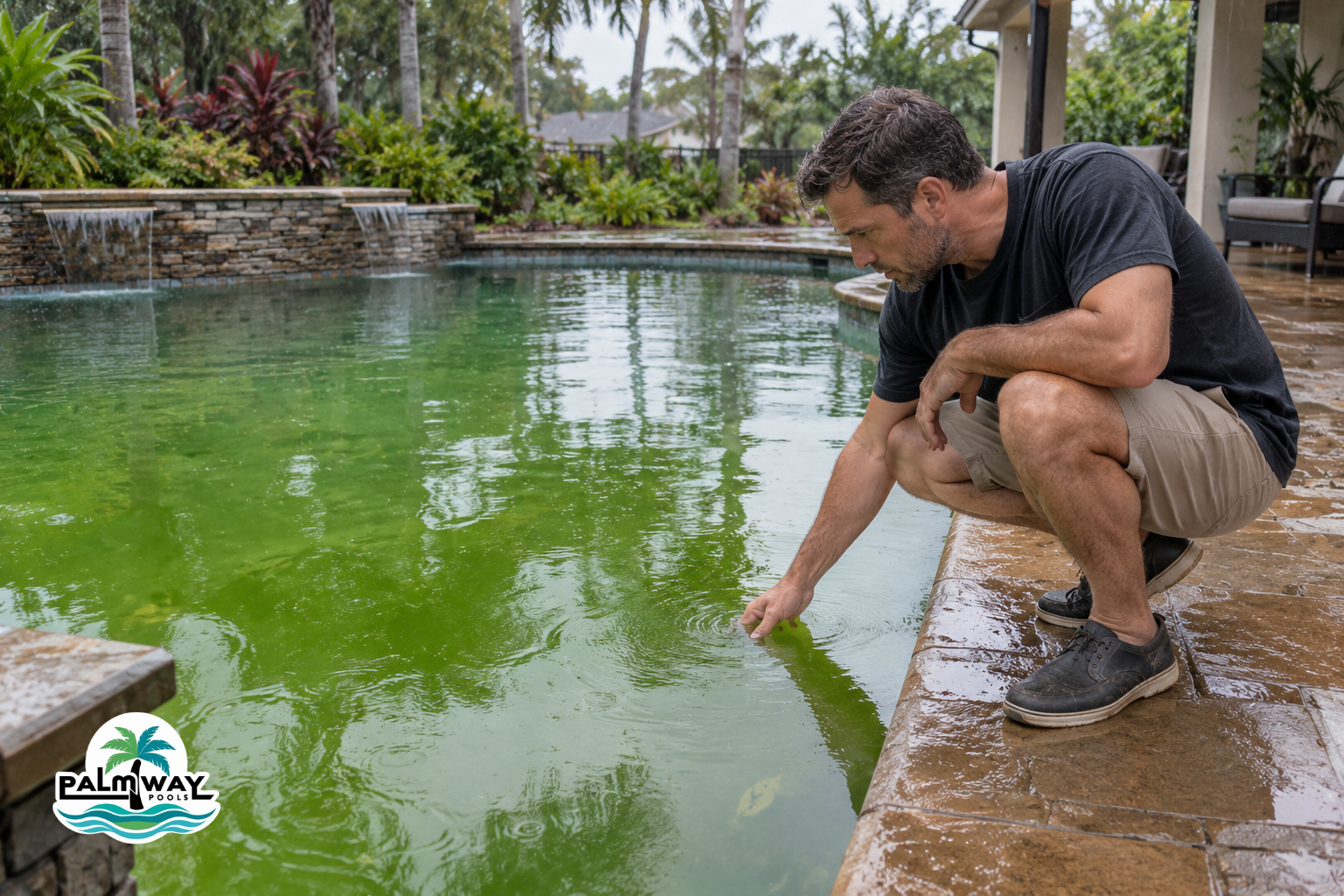
Algae is a clear sign that maintenance has slipped. It thrives when chlorine levels drop, filtration is weak, or circulation leaves dead spots. Once algae take hold, it can coat the walls, cloud the water, and require more chemicals and labor to fix.
In Florida, warm weather makes this issue even more common. In a humid environment, algae can spread quickly after just a few missed cleanings or poor circulation. That's why keeping a consistent schedule is crucial, especially during high-growth months. Regular brushing, vacuuming, and chemical checks can mean the difference between a quick fix and a costly cleanup.
Pump Strain and Poor Circulation
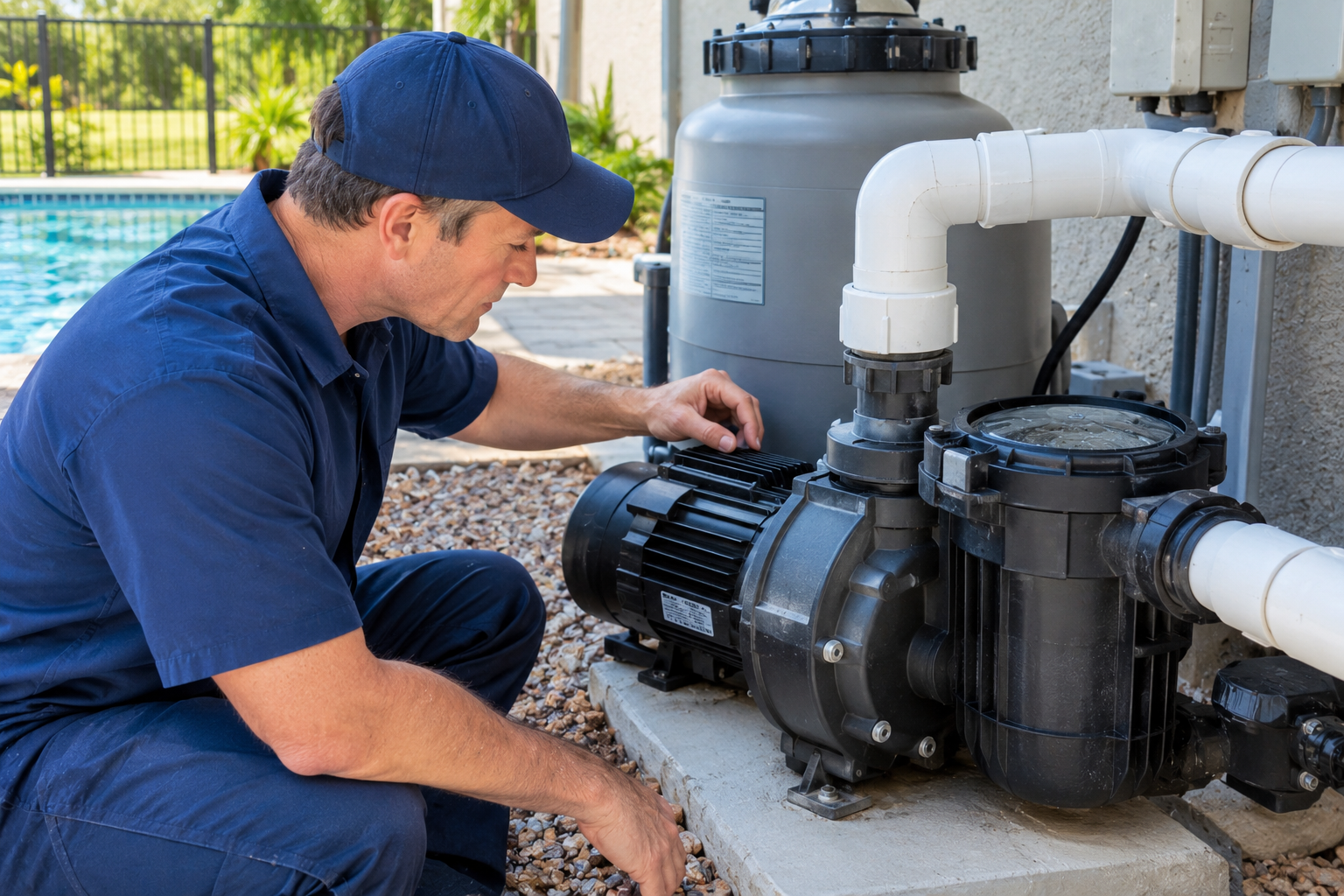
The pool pump is the heart of your system. When it struggles, your whole pool feels it. Weak circulation means debris stays in the water longer, sanitizer isn't distributed evenly, and filter performance declines. Over time, this can lead to noisy operation, overheated parts, leaks, or even total pump failure.
If you hear rattling, notice reduced flow, or experience frequent prime loss, the issue might be more than just a dirty basket. Early attention can prevent a larger repair bill. Sometimes a simple service call is enough, but older or frequently failing systems may need pump replacement or broader equipment repairs and upgrades to restore efficient operation.
Clogged Filters and Declining Water Quality
If your filter is overloaded or worn out, it can't trap fine particles effectively. This leads to cloudy water, higher chemical demand, and more frequent cleanings. If the filter is damaged or past its useful life, even the best water chemistry won't compensate.
Regular inspections help determine if the issue is a cleaning need, a media replacement, or a full system upgrade. Clean filters support healthy circulation, reduce strain on the pump, and improve clarity. For those who want cleaner water with less hassle, timely filter replacement can be a smart investment.
What to Include in a Smart Pool Maintenance Routine
Daily and Weekly Cleaning Habits
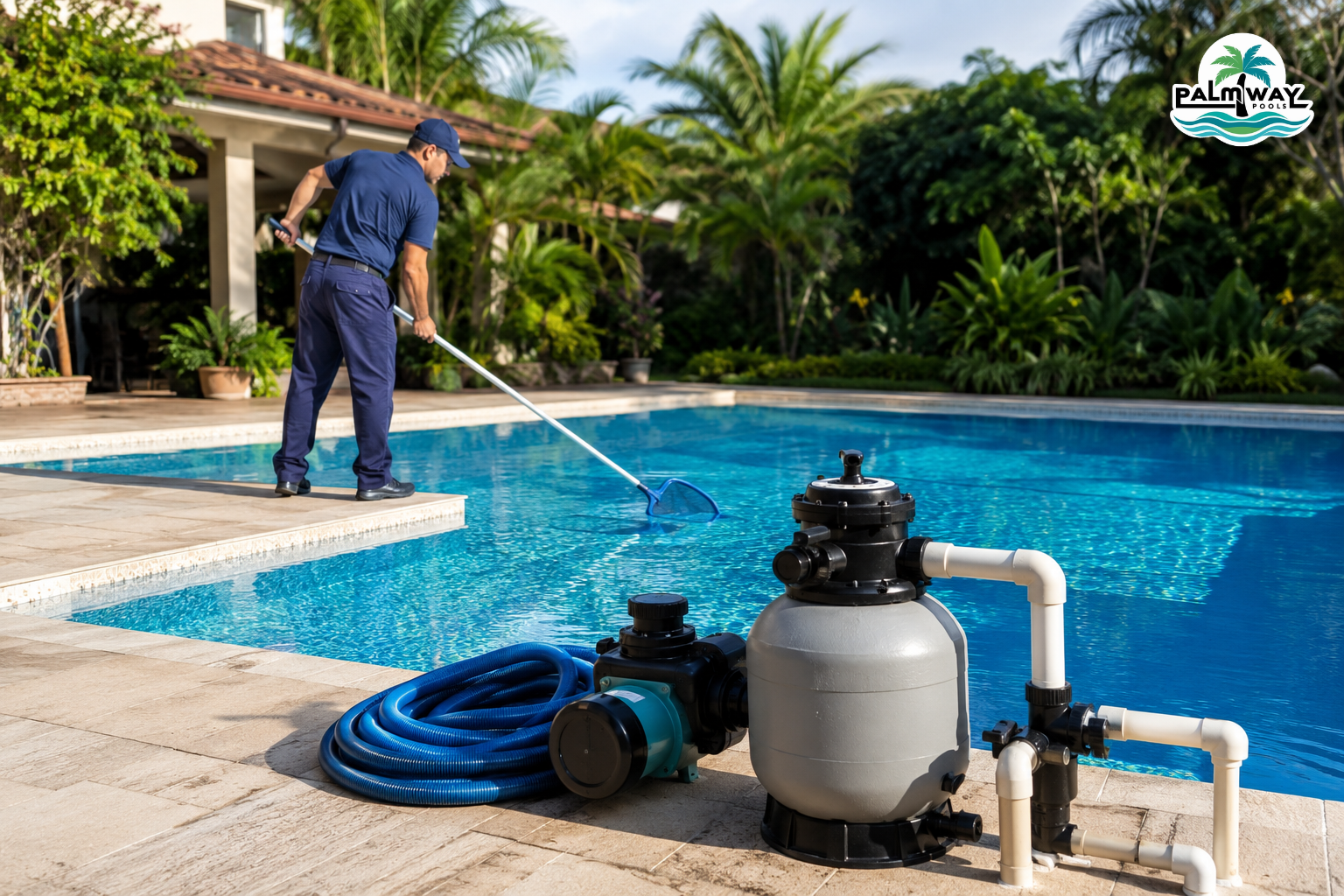
A solid maintenance plan starts with simple physical care. Skimming leaves and debris from the water surface prevents buildup in the basket and filter. Brushing walls, steps, and tile lines removes early algae before it becomes visible, and vacuuming the pool floor keeps sediment from collecting in dead zones.
These tasks might sound basic, but they hugely impact repair prevention. Debris that stays in the pool can stain surfaces, clog returns, and make circulation equipment work harder. Homeowners who prefer a hands-off solution often benefit from scheduled pool cleaning to handle these tasks consistently, even during busy weeks.
Water Testing and Chemical Adjustments
Water chemistry should be checked regularly, not just when the pool looks cloudy. During peak season, testing 2 to 3 times per week is a practical standard because sunlight, rain, swimmer load, and temperature all affect water balance. The goal is to catch drift early before sanitizer becomes ineffective or the water becomes irritating.
Good testing habits also help protect pool finishes and equipment from long-term damage. Chlorine, pH, and alkalinity all work together, so correcting one reading without considering the others can create new problems. If keeping up with testing feels difficult, professional pool service can provide a dependable maintenance rhythm and reduce guesswork.
Equipment Inspections and Circulation Checks
Even a clean, balanced pool can develop costly issues if the mechanical side is ignored. Inspecting pumps, filters, heaters, valves, and timers helps identify leaks, electrical concerns, or flow restrictions before they become emergencies. This is especially important before heavy-use periods when the system will be under more stress.
Experts also recommend running the pool pump for 8 to 12 hours daily during peak season to maintain circulation and water quality. That recommendation is consistent with industry best practices and supports even distribution of chemicals across the pool. For more maintenance details, the U.S. EPA WaterSense pool maintenance guidance offers useful information on conserving water while keeping systems efficient.
How Proper Care Extends Equipment Lifespan
Reducing Wear on Pumps, Heaters, and Filters
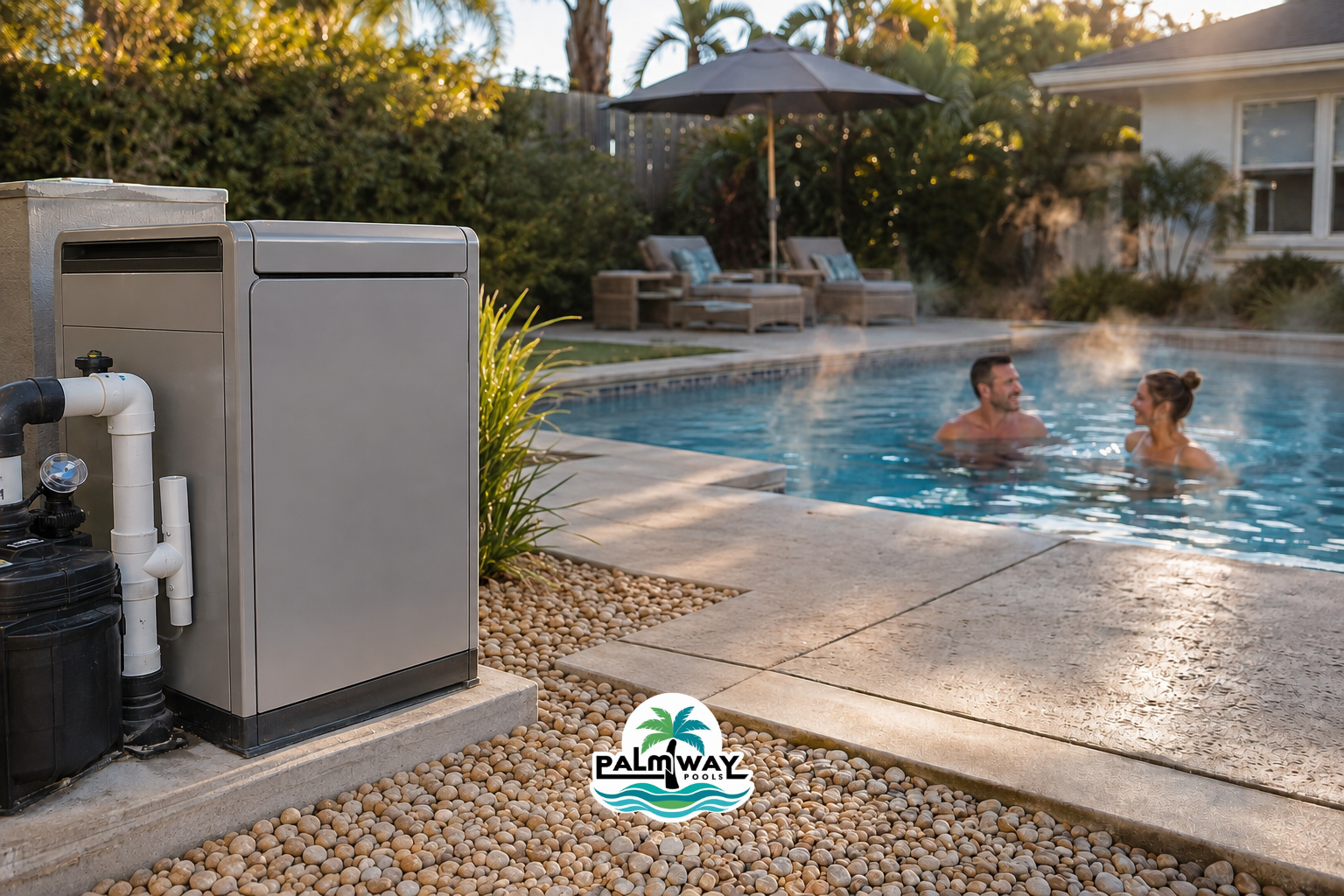
Equipment lasts longer when it doesn't have to work against preventable problems. Pumps run more efficiently when baskets are clear and flow is unrestricted. Heaters operate more reliably when water chemistry is stable, and scale doesn't build inside the system. Filters also hold up better when cleaned on schedule rather than pushed far beyond capacity.
Think of maintenance as a way to protect all the moving parts that keep your pool functional. A single neglected component can trigger stress elsewhere in the system. For example, a weak pump may force a filter to work harder, and a clogged filter may create back pressure that shortens pump life. Coordinated care helps the entire system perform better for longer.
Why Upgrades Can Be Cheaper Than Repeated Repairs
Sometimes, repeated service calls become more expensive than replacement or upgrade. Older pumps, worn filters, and aging heaters often lose efficiency and need more attention than newer systems. If a part keeps failing, it may be better to invest in modern equipment that's easier to maintain and better suited to your pool’s demands.
Modern controls can also help pool owners save money by improving scheduling and reducing waste. Because smart controllers are increasingly common, many pool owners now use automation to simplify circulation and chemical management. When it makes sense, equipment upgrades can deliver both convenience and lower operating costs over time.
Pool Care in Coastal Florida: Why Treasure Island Pools Need Extra Attention
Warm, Humid Weather Speeds Up Algae and Debris Issues
Coastal conditions make routine pool care more important, not less. Warm temperatures encourage algae growth, while humidity and wind can increase debris, pollen, and surface contamination. Rainfall can also dilute chemicals and alter water balance, which means owners need to monitor levels more often than they might in a cooler, drier climate.
In Treasure Island, these local realities make consistent maintenance especially valuable. Even a short lapse can allow a small issue to become a visible and costly problem. That’s why many homeowners choose a local provider that understands the pace of Florida weather and the demands it places on pools year-round.
Water Loss and Evaporation Add Hidden Costs
Pool owners are often surprised by how much water is lost each year. The average residential pool in the U.S. uses 25,000 to 75,000 gallons of water annually, and about 90% of those losses come from evaporation and splash. This means water management is not only an environmental concern but also a budget issue.
When maintenance is consistent, owners can reduce unnecessary water loss by keeping equipment in good shape and preventing leaks or overflow problems from going unnoticed. Good circulation and stable chemistry also help lower the chance of corrective draining or repeated refilling. In a high-use season, that can translate into meaningful savings.
Case Study: How Routine Maintenance Reduced Costs for a Florida Community Pool
The Problem: Algae, Weak Circulation, and Rising Expenses
A community pool in Florida started seeing algae growth and cloudy water over and over. At first, the property team thought it was just a chemical issue, but the problems kept coming back. After several rounds of extra treatment, they realized the root causes were inconsistent testing, poor circulation, and a cleaning schedule that was too infrequent for the pool’s usage.
As the issues continued, maintenance costs went up. Chemical use increased, staff time rose, and swimmers began to notice that the pool looked less inviting. The system wasn't failing all at once, but it was slowly becoming more expensive to operate because small warning signs were being ignored.
The Fix: A Structured Service Plan
Once the property switched to a structured maintenance plan, results improved steadily. The team started daily skimming, weekly brushing, consistent vacuuming, and regular pump runtime adjustments. Water testing became more frequent, and the pump schedule was set to support stable circulation during busy periods.
After these changes, water clarity improved, algae outbreaks declined, and overall maintenance costs dropped. The biggest lesson was not that the pool needed one big repair, but that consistent care had been missing. Preventive service protected the equipment, reduced emergency calls, and made the pool easier to manage long-term.
Warning Signs That Your Pool Needs Immediate Attention
Visible Symptoms You Shouldn't Ignore
Some pool problems are easy to spot, and when they appear, it's best not to wait. Unusual pump noise, weak water flow, persistent cloudiness, surface stains, and sudden chemical instability all point to trouble somewhere in the system. A pool that looks slightly off today may become a repair project tomorrow if the cause is left unresolved.
These signs often mean the equipment is under stress, water balance is drifting, or debris is accumulating faster than the system can handle. For a practical overview of symptom-based troubleshooting, our article on how to tell if your pool pump needs attention can help you decide whether a repair, inspection, or replacement is needed.
When to Call a Professional
If you're repeatedly correcting the same problem, professional support is usually the fastest way to stop the cycle. A trained technician can inspect circulation, test chemistry, evaluate filter performance, and identify whether the issue is simple maintenance or a failing component. In many cases, early intervention prevents a minor problem from becoming a major outage.
This is especially helpful for owners who want predictable results and fewer surprises. Professional support is not just about fixing what is broken. It’s also about preventing breakdowns, saving time, and keeping the pool ready for use when you need it.
How to Build a Maintenance Schedule That Works
Match the Schedule to Your Pool’s Use
The best maintenance schedule fits your pool’s environment and usage patterns. A heavily used family pool will need more frequent cleaning and testing than a lightly used vacation property. Pools in tree-lined areas may also need more skimming and vacuuming because debris builds up faster.
A good rule is to review tasks by frequency: daily visual checks, weekly cleaning, several tests per week during peak season, and monthly equipment inspections. If you want help staying consistent, a tailored plan through pool service can align maintenance with actual demand instead of a one-size-fits-all routine.
Use Seasonal Changes to Guide Adjustments
Seasonal changes affect chemical demand, pump runtime, and cleaning frequency. During hotter months, water can lose sanitizer faster, algae can grow more quickly, and circulation becomes more important. During cooler periods, the pool may need less runtime but still requires attention to debris, chemistry, and equipment condition.
Owners who adjust for the season typically spend less over time because they are not over-treating or under-maintaining the pool. This flexibility also helps equipment last longer and keeps water quality more stable throughout the year.
Frequently Asked Questions About Preventing Pool Repairs
How Often Should I Test My Pool Water?
During peak season, testing 2 to 3 times per week is recommended so you can catch small chemistry changes before they become bigger problems. If the pool is heavily used, after storms, or during periods of strong sun and heat, testing may need to happen even more often. Regular testing is one of the simplest ways to avoid costly repairs because it helps protect both water quality and equipment.
How Long Should the Pump Run Each Day?
Running the pump for 8 to 12 hours daily during summer is a common best practice because it supports circulation, filtration, and chemical distribution. The exact runtime depends on pool size, equipment efficiency, and how often the pool is used. If your current schedule is not keeping water clear, circulation may need to be adjusted, or the pump may need inspection.
What Are the Signs That Equipment Needs Maintenance?
Unusual noises, reduced water flow, leaks, repeated tripping, or visible damage are all signs the equipment may need attention. These symptoms often appear before a complete failure, so they are worth taking seriously. The sooner an issue is identified, the more likely it is that a repair will stay manageable.
Can Automation Really Help Prevent Repairs?
Yes, smart controllers can help by improving consistency and reducing the chances of human error. Automation makes it easier to control pump schedules, monitor system performance, and maintain circulation at the right times. Since many pool owners now use smart controllers, this trend is becoming an important part of efficient maintenance.
Protect Your Pool, Protect Your Budget
Taking good care of your pool is one of the best ways to avoid costly repairs, keep water quality high, and extend the life of your equipment. By staying ahead of algae, keeping chemistry in check, routinely cleaning, and inspecting components before they fail, you can avoid expensive surprises. This is especially crucial in a climate where heat, humidity, and debris can speed up wear and tear.
If you want reliable help with ongoing upkeep, from cleaning and chemical balancing to equipment checks and repairs, Palmway Pools is here to support homeowners and businesses with professional service. Explore our pool cleaning, pool service, and equipment repair and upgrade options to keep your pool running efficiently. For more insights, you can also read our related post on smart pool maintenance tips to save money and hassle.
Ready to prevent breakdowns before they start? Contact Palmway Pools at (844) 307-1680, email info@palmwaypools.com, or visit us at 11300 8th St E, Treasure Island, FL 33706, USA to schedule a maintenance plan that fits your pool’s needs.